The Beginnings of Man -Part 3

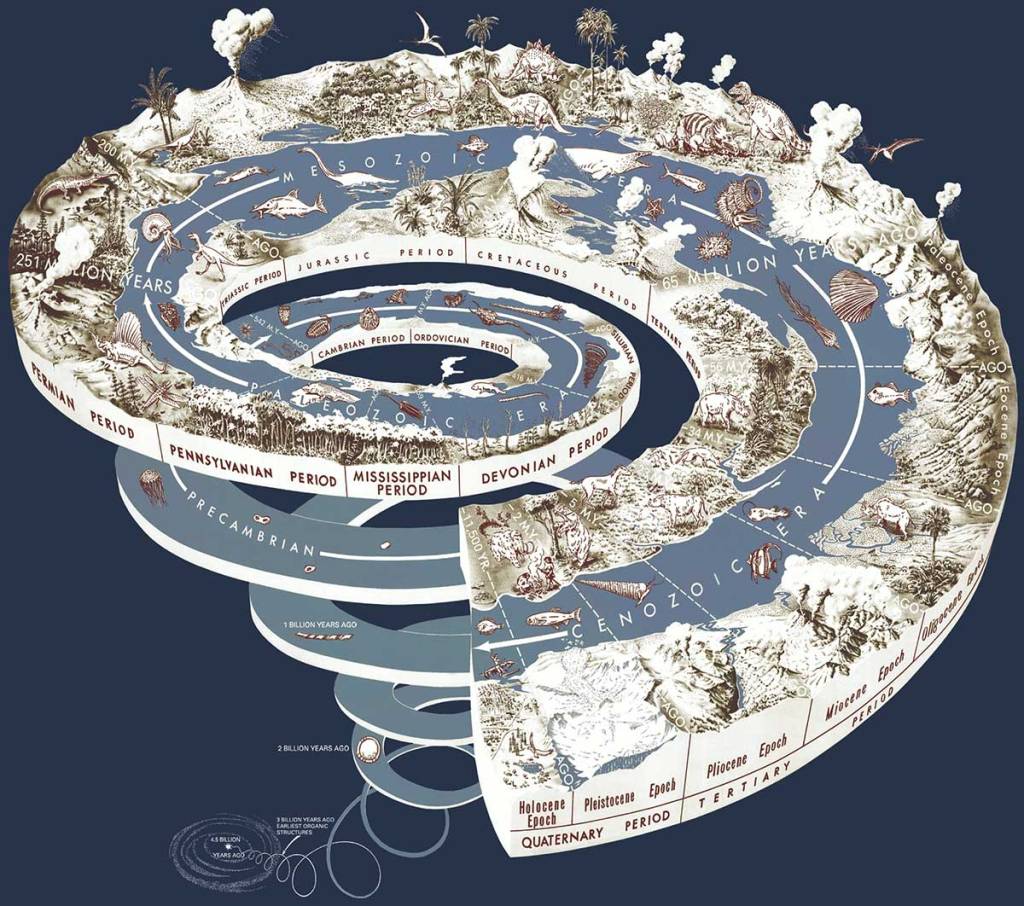
How and when was Man physically created? Homo erectus (“upright man”) appeared around 1.9 million years ago and persisted until at least 110,000 years. Homo erectus is widely considered an ancestor of later humans.

If you haven’t read Part 1 -here it is The Beginnings of Man -Part 1 – Mine Quick Voice of Aquarius and part 2 is here The Beginnings of Man -Part 2 – Mine Quick Voice of Aquarius
According to science reflective consciousness is the capacity to be aware of and critically evaluate one’s own mental states, enabling self-reflection, metacognition, and intentional behaviour, which is a human definition of itself. We further distinguish reflective consciousness from primary or phenomenal consciousness which involves raw sensory experience.

I have said that reflective consciousness, albeit that is inclusive of phenomenal consciousness, is a feature of all vertebrates -we can go further than that! For example, plants don’t feel pain, but they can sense damage and respond with complex chemical and electrical signals. In short; all forms of life have consciousness that is reactive to change and that is because we live in a light reflective world. So, Man defines it for himself but chooses not to recognise it as consciousness in other forms of life. The issue of understanding here is that Man thinks of himself as the only form of vertebrate life that has consciousness -at least of the kind he defines for himself. Yet again, Man is myopically viewing the universe through his rationally minded ego, which is uniquely present in Man.

How and when was Man physically created?

Homo erectus (“upright man”) appeared around 1.9 million years ago and persisted until at least 110,000 years. Homo erectus is widely considered an ancestor of later humans, including Homo heidelbergensis, which in turn gave rise to Neanderthals, Denisovans, and Homo sapiens. Homo heidelbergensis lived approximately 700,000 to 200,000 years ago across Africa, Europe, and possibly Asia. Neanderthals, Denisovans  and Homo sapiens were closely related human species as a result of interbreeding, with distinct physical, cognitive, and cultural adaptations, but only Homo sapiens survived to populate the modern world. Homo sapiens have demonstrated remarkable adaptability and innovation. The earliest homo sapiens (according to Anthropology) were hunter-gatherers, and around 13,000 years ago, the Neolithic Revolution introduced agriculture and permanent settlements -and that is the beginning of the Flood period that ended approximately 9’000 years BCE.

Homo Sapiens (Latin) means ‘wise man’. Clearly an egocentric definition. Neanderthals existed from roughly 430,000 to 40,000 years ago, coexisting with early modern humans for tens of thousands of years. Both Neanderthals and Denisovans demonstrate the complexity of human evolution and the interconnections among archaic humans. DNA studies have looked for ‘strings’ that have remained relatively stable for eons but had exploded into evolutionary action since we and chimps diverged from our common ancestor.

When we look to see what might have changed us into Man there are many references in so-called mythical writings which refer to a union between god-like beings and ‘Men’.

The acceptance of God(s) creating Man is fundamental to the concept of all major religions, but they cannot tell you why God(s) chose to do so.  Myths are accounts of events and the actions of peoples, gods and forces, from periods of time before the ‘discovery’ of writing, the earliest form of which was  Cuneiform, developed by the Sumerians around 3400–3100 BCE. However, the historicity of ancient stone structures and of symbols engraved upon them can be carbon-14 dated, as for example the construction of Stonehenge shows its origin was approximately 10’000 years ago.

The intelligence of peoples who built these ancient structures encompassed knowledge which accedes in some respects the knowledge we have today. How they came of this knowledge is mystery, as is their accurate detail of the solar system and star world known thousands of years prior to Galileo. Myths are records of a past memories verbally passed down by succeeding generations in different parts of the world, showing comparable events and God-like Beings in prehistory, which cannot be explained historically by global interaction of information. Even as late as the 20th century there were families in Asia who attested to a historical line of ‘story tellers’ who faithfully passed on their knowledge to subsequent generations -stories that cannot always be dated to have occurred after the creation of writing.

What we are told in the Old Testament e.g., in Genisis 6:2 is … the sons of God saw the daughters of Man were attractive. And they took as their wives any they chose…. And in the Book of Enoch, the “Sons of God” are often identified as angelic beings, specifically referred to as the Watchers. They are described as descending to Earth and becoming enamoured with the daughters of men, leading to the birth of the Nephilim. The Nephilim are also mentioned primarily in Genesis 6:1–4 and Numbers 13:33. In Genesis, they appear in the context of the “sons of God” mating with the “daughters of men,” producing offspring described as “mighty men of old, men of renown” (Genesis 6:4). . In Numbers, spies report seeing the Nephilim in Canaan, describing them as so formidable that the Israelites felt like grasshoppers in comparison.

Interpretations of the Nephilim vary widely across religious and academic traditions. One influential view, preserved in Second Temple literature such as 1 Enoch and Jubilees, identifies the Nephilim as the offspring of rebellious angels (the Watchers) and human women, portraying them as destructive giants whose corruption contributed to the moral decline preceding the flood. Another major interpretation, found in some early Jewish and Christian commentaries, describe the Nephilim as powerful human rulers or warriors, possibly arising from intermarriage between the righteous line of Seth and the unrighteous line of Cain. A third approach views the Nephilim as legendary or symbolic figures reflecting ancient Near Eastern traditions about semi-divine heroes or primordial beings.

The concept of gods mating with men is a common theme in various mythologies and religions, for example, in Greek, Indian, and Islamic Mythology. Human Science has found it’s impossible to date even approximately by tens of thousands of years when this era could have occurred. Modern man can be estimated as beginning his cycle of development some 300’000 years ago, but we have no archaeological dating of discoveries or Human Science that can reliably advise existence of the ancient civilisations previously referred to.

However, what we can say is some basis of attraction enabled the union of Gods and men, It’s reasonable to suppose that Gods expressed that need, which also suggests that whilst myths show their interaction was to ‘make men wise’ (Homo Erectus?) it also must mean they were not entirely self-contained, having a balance of energies eternally present . There is a tendency amongst scholars to suggest the actions of Gods was arbitrary and at best to suggest humans were ‘engaged’ to facilitate and further the warring of Gods between themselves.

The Hebrew bible refers to these Gods as the Elohim, which means many gods. And Enoch calls them the Watchers, a group of Angels who rebelled against God and fathered the Nephilim. Less the ideological interpretation it means an intelligence (not necessarily an entity in human form) mated and influenced development of the DNA in early man.

There are many creation myths. The most widely known account by English speaking people is the Garden of Eden story told in Genesis, often interpreted as a theological narrative explaining humanity’s transition from innocence to moral awareness, introducing concepts of sin, suffering, and mortality.

According to Genesis, God created the first man, Adam, from the dust of the ground and breathed life into him, forming the first human being (Genesis 2:7). God then created the Garden of Eden, a lush paradise in which the tree of knowledge of good and evil was at its centre. Adam was directed to tend the garden, name and care for all the animals. Seeing that Adam needed a companion, God took one of his ribs, and created Eve, the first woman (Genesis 2:21-24). Naked and unashamed they enjoyed the harmony of the garden, until that is, the appearance of a serpent, who deceived Eve into eating the forbidden fruit from the tree of knowledge of good and evil. She then shared the fruit with Adam, and upon eating it, they became aware of their nakedness and felt shame, symbolizing the loss of innocence and the acquisition of moral knowledge. God punished them for their disobedience causing Eve to experience the pain of childbirth and be subject to her husband, while Adam would ‘toil the ground’ for sustenance. Clothed in animal skins they were expelled from the garden and prevented from returning.

And where was this Garden of Eden? Traditionally it’s believed to have been located in Mesopotamia, near the confluence of the Tigris and Euphrates rivers, but there is no archaeological evidence to suggest it was. The only evidence we can be certain of was it could only have existed prior to the great flood, perhaps even 100’s of thousands of years before.

And what exactly is the story telling us?

In simple terms, less the theological interpretation, the story is saying God created the first man for the task of managing the Garden of Eden. Initially all was hunky dory with Adam doing exactly what he was born to as a caretaker, until God decided Adam needed a mate and created Eve from one of Adam’s ribs. Now the trouble starts. God warns them not to eat from the Tree of Life, but Eve doesn’t take God seriously and eats an ‘apple’ from the Tree. Adam doesn’t do anything to stop her and worse still actually eats an ‘apple’ as well. God is furious and causes Adam to seed her with his sperm causing Eve ever after to suffer the pangs of childbirth. They both became aware of themselves being naked. Adam has to ‘husband the soil’, which means he and Eve needed food to survive and that involved killing animals which hitherto he had been friendly with.  Not content with lowering their status God banishes them from the Garden and for good measure posts an Angel at ‘the gates’ with the express purpose of denying them entry should they attempt to.

I think you have to agree things didn’t go according to plan. We have to seriously question who God is in this story because as told He is clearly not omnipotent. As told He either intended to cause disunity, or He simply cocked it up!

Who is this God? In other creation stories the advent of Man is described as caused by divine or supernatural beings. Nowhere do these myths admit to omnipotent powers making mistakes. The blame for the outcome is firmly placed on the Serpent. Now, if we look at the Garden of Eve story, less its theological interpretation. where ‘God’ is an ‘intelligence’ that could be described as a group of beings with interest in ‘creating ‘ human beings, a different story emerges.  

Could these ‘beings’ be the Watchers referred to by Enoch?
The Beginnings of Man -Part 2

To understand why the nature of man is different from other species, we must first establish what our differences are from the primate world we physically evolved from….

Man’s inner characteristics are altogether different from the ancestral root which governs other species. Why then is he so different?

If you haven’t read Part 1 -here it is The Beginnings of Man -Part 1 – Mine Quick Voice of Aquarius

To understand why the nature of man is different from other species, we must first establish what our differences are from the primate world we physically evolved from. Our closest ‘relatives’ the apes, gorillas, and chimpanzees are like Man, family orientated, having respect for the hierarchical order of age and experience and are protective of their environment to ensure the safe upbringing of their young and provision of food. They do not desire to dominate other species or their like and will only kill or disable to protect their kind and the territory which enables their way of life. Their memory is instinctually formed from community needs. Their ego which is part of the mind that mediates between the conscious and unconscious is instinctually driven by their ancestral nature.

Human beings will go further to engage and unify with different kinds of people. They practice the hierarchy of blood ties but will not allow procreation to govern hierarchies of order considered necessary to defend the interests of like-minded need. They have an innate desire to dominate and control other species, and memory goes far beyond the need to remember place, person, and life-giving support. The ego that mediates between the conscious and unconscious is guided by two concepts which often war with each other, namely a need to understand rights and wrongs and the belief in their self-creation; I am what I am.

Whilst the environment engenders Man’s survival instinct so also does his self-awareness which ultimately governs his survival needs. It is evident from recorded history the ego of Man is intent on self-creation. Whilst conceptual values are broadly common across all ethnically different populations, conscious interpretation to effect the superego varies widely.  Whilst Man’s instinctual nature to survive is primarily engendered by the environment, it is the ego which decides the cause of threat, the outcome of which will always be predicated by the awareness of Self as understood by the ego.

Because the ancestral nature of Man is elemental in origin it means that the id -source of all his instinctual expressions can never be fully rationalised. In practise Man’s rational mind is constantly attempting to balance the promotion of his superego with the instinctual irrational impulses that are generated by his ancestral heritage.

The result? He is continually in conflict with himself, which is why history keeps repeating itself, or as some would say he never learns….

The Darwinian evolution theory states that species evolve over time through natural selection, where advantageous traits increase an organism’s chances of survival and reproduction. Molecular biology and genetics have confirmed physically formed evolutionary relationships, such as the close genetic similarity between humans and chimpanzees and acknowledges all living organisms share common ancestors, but the sciences are unable to explain how the uniqueness of man’s evolution was caused or why his egocentric development is so markedly different to our nearest physical ancestors. Survival of the fittest does not give an adequate answer. And so it follows his relationship with the environment is different to all other individualised life species.

In addition to individualised species, perennial plant life is by far the most widespread kind of life on Earth. Man does not describe it as having consciousness as he defines that only able of a species who is consciously aware of evolving self-creatively; the ‘I think so I am’ argument. Perennial plant life and its interactivity with the elements of fire, water, air, and earth have a major influence on Man. In accordance with seasonal life cycles, weather conditions, and cosmical influences, the perennial life world can undo and destroy Man’s physical creations.

And as Man’s sensorial nature is directly influenced by environmental changes they do affect the balance of the mental and emotional order of his mind. It is accepted many species have conscious awareness of impending change, both internally and externally before they become physically fact. Man however is overly dependent upon the rational mind to advise conscious awareness and will dismiss or repress the instinctual response which is trying to advise him.

His inability to consistently channel instinctual awareness is entirely due to the development of his rational mind which restricts the id of his consciousness the ability to express awareness of his ancestral memory, implicit to his DNA. This points to a fundamental difference between himself and other forms of Earth Life, all of whom maintain awareness of their ancestral mind as expressed by their instinctual nature.

Is it possible that some form of unearthly life affected the development of Man, and were causal of the difference between himself and other forms of Earthly life? We know the Earth has historically been impacted by meteors, fireballs, solar flares, and planetary gravitational pulls, altering land and sea masses, their vibrational nature absorbed into the Earth’s crust, but such physical and neo-physical phenomenon would also have influenced all other life forms, including our nearest ancestors.

To understand why humans are a uniquely different species and regard themselves as the Overlord of all other Earth forms of life we need to understand the nature of his consciousness.

Scientific research has been said to say some individual species don’t know they exist because they don’t possess reflective consciousness, i.e., the ability to know the self, and because they are driven by and totally possessed by the id. We should not accept this analysis because the instinctual self as manifested in a moving form exhibit both physiological and behavioural responses ultimately aimed at propagation which is compulsively selective. This means that vertebrates have awareness of what their need demands and that is a form of reflective consciousness.

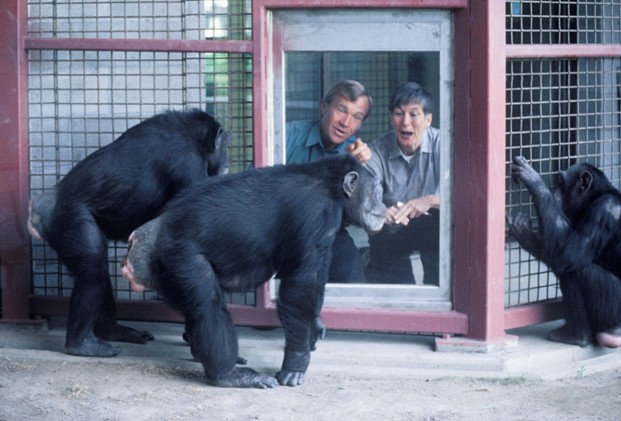
                And any form of reflective consciousness, whatever the species, is a form of mind that interacts between the id and the superego. So, for example because a fish can feel pain it does so because it possesses reflective consciousness. Some animals, including our nearest mammalian world relatives the chimpanzees have well-developed egos, a strongly developed interaction between their id and Superego which for them is a function of their societal memory and parental standards.        

So how does Man’s reflective consciousness, the awareness of self, differ from his nearest mammalian relatives? In our own terms we describe our consciousness as the awareness of one’s mental states arising from the interactivity of the ego enabling the evaluation of thoughts, feelings, and experiences. And this differs in one critical aspect to the highest form of ego development in our nearest genetically comparable species, the chimpanzee, namely it is the ability to be selectively aware of our own mental states and decisively able to change their order and priority. Whereas the chimpanzee capacity to change order and priority is governed by the id’s memory reception. To put it another way their behavioural responses are predictable.

It is not because human brain is three times larger, but because it operates differently. Recent studies have shown that whilst we share anywhere from 96-99% of our DNA with the chimpanzee there are areas which instead of producing proteins, act by changing the formation and tactics of protein producing genes, which in simple English means humans have a DNA structure that enables thinking!

Am I saying that Chimpanzees don’t think? No I am not. What is different in Man is his ability to reason, whereas the chimpanzee only considers and decides on need. When human beings reason they invoke the order of their self-centred ego, which is forever unsatisfied with the responses!

Part 3 next week!

The Beginnings of Man -Part 1

The nature of Man has evolved over millions of years, changed by environmental conditions, by the response of his instinctual nature and by the actions of his ego. Man’s inner characteristics are altogether different from the ancestral root which governs other species. Why then is he so different?

The nature of Man has evolved over millions of years, changed by environmental conditions, by the response of his instinctual nature and by the actions of his ego. The DNA of all earthly forms of life, Amniotes, Synapsids, Mammals and  Primates are present in Man, which is clear proof that the birth of Man was earthly by nature.

Man describes himself as more evolved than any other form of earthly life, and that is an assumption based on having 20 times more DNA than a chimpanzee, able to express his consciousness self-aware, and knows his rational nature is not shared in any superior way with our nearest primate ancestors. It is an assumption because after you allow the knowledge we have acquired in researching our DNA and the genomes of other species, there is still more unknown than known of the purpose and action of DNA in Man. Our self-interested view of other species assumes Amniotes, Synapsids and some mammals don’t know themselves because they have (as we say) no self-awareness.

                Physics only began to accept in the 20th century the root nature of energy is not physically based. The huge spatial state in the atom between physically identifiable neutrons, protons, and electrons, previously described as ‘space’ manifests Black Matter influenced by an unknowable force now called Dark Energy, both of which influence the functional nature of Light Matter. Whilst Astrophysics and Particle Physics can provide evidence of Black Matter and point to the existence of Dark Energy their true nature continues to elude definitive understanding.

Understood or not it throws into question the evolutionary nature of all forms of life, not least being Man. Man is undoubtedly different and able to control the development and action of other species in the Light Matter world of Earth but is he truly aware of his own design and purpose? The physical nature of Man has evolved from the branch of primates known as Haplorhini that subsequently split, separating the New-World monkeys and apes from the Old-World monkeys and apes 30 – 40 million years ago. The distinctive features of the Catarrhini apes and monkeys with downward pointing nostrils found in Africa and Asia clearly indicate they were the ancestors of Hominoidea linage of apes that were evolving 25 to 30 million years ago who are more directly our ancestral lineage.

Early man’s existence is evidenced by discoveries in the Middle East that date from 17 million years ago, and onward into the Neanderthal and Denisovan periods between 430’000 and 25’000 years ago. Cataclysmic changes that altered land masses and seas and long periods of extreme temperatures causing the demise of dinosaurs and many other primates would have destroyed some forms of early Man. The environment was a major influence determining that only the fittest survived, but was that due their intelligence as well as physical hardiness? Whilst we can be reasonably sure with DNA evidence how a hybrid form of Man become the Modern Man, science cannot read from physical remains how their minds behaved.

Evidence from early forms of human recorded communications (albeit these are described as Myths and Folklore) posit the existence of human civilisations in Lemuria, Atlantis, Hyperborea (north polar region), and Adamos (south polar region) in the pre and post Deluvian period which approximates to the ending of the Younger Dryas age 13’000 to12’000 BCE.

This ‘evidence’ which has mainly survived in myths, folklore, symbolic writings, and physical building remains, in the post-diluvian epoch clearly advises a difference of evolution between their inherited societies and the hunter gatherer communities of men who lived in the same and subsequent periods of history. This dichotomy cannot be resolved by tracing alternate routes of human evolution from the known history of Earth life development.

Scientifically we cannot confirm the existence of these ancient civilisations, but neither can we cannot entirely debunk the mass of archaeological evidence of intelligent human societies that predate recorded history and show the existence of intelligent beings on Earth prior to the cataclysmic floods that occurred following the end of the last major glacial period known as the Last Glacial Maximum 20’000 years ago.  As Earth’s climate gradually warmed, the glaciers in the north of North America, Europe and Asia began to melt. Vast quantities of water flowed back into the oceans. Over thousands of years, sea levels rose steadily. Between 15’000 and 8’000 years ago sea levels rose rapidly enough to flood huge areas of land across the globe.

Stories of the flood appear in many cultures, such as the ancient Mesopotamian epic known as the Epic of Gilgamesh, the biblical account of Noah’s family and of animals saved from the flood, the story of Deucalion and his wife Pyrrha, who survive a world-destroying flood sent by the gods. In Hindu tradition, a similar story describes Manu being warned by a divine fish that a great flood will soon destroy humanity. Flood narratives are also in the  folklore of the indigenous cultures of South and North America, Australia, Africa and Asia.

In all these stories and myths evolved Beings were (a) aware of the floods before they happened, and (b) they taught the Homo Sapiens survivors how to reclaim good soil, domesticate plants and trees, learn building techniques, mathematics, astronomy, and the ability to record their actions in symbolic forms of writing. It is following the great floods that Man as we know him today began to evolve. The intelligent Beings of these myths are recorded as human-shaped Beings with God-like powers, and it was their foresight that saved Modern Man from destruction by appointing emissaries such as Noah in the Bible and Utnapishtim in the Mesopotamian myth how to survive the flood.

The earliest form of recorded history speaks of Gods interacting with humans, and in some accounts birthing gigantic forms of Man with powers able to harness and control the elemental order of the cosmological Earth. The only anthropologic evidence of giants is of primates who lived in subtropical Asia from about 2 million years ago until roughly 330,000 years ago. Upwards of 10 feet tall the (Gigantopithecus blacki) such palaeontological evidence we have indicates they were of the genus of Ape.   However, what we do know is Homo Erectus lived in the same period and they may have physically mated. But we have no evidence to suggest their evolution or a hybrid form continued to the Younger Dryas period, the era when the ancient civilisations referred to are said to have occupied large land masses prior to the great flood, however giant men are recorded to have lived both prior and post the great flood.

Man can be said to have become Man when his conception became individualised by the form of ego he has, making him different in consciousness to all other species of Earth life. The consciousness of the individual forms of mammals, Invertebrates, Amphibians, Reptiles, Fish, and Birds are all instinctually  developed, the expression of their conscious nature and the awareness of their light form self is governed by the inner characteristics of their species. What one could call their group nature.

Man’s inner characteristics are altogether different from the ancestral root which governs other species. Why then is he so different?

Part two continues to seek answers to this question…