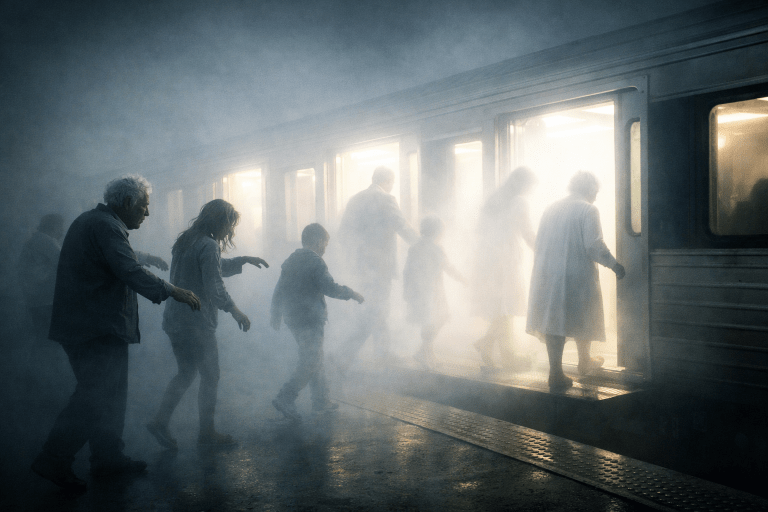
The planets conjunct, portending his birth bade us search on…….
We found him there in Bethlehem as the charts foretold but not with ease. Not one well to do house of Arab or Jew Roman or Greek had birth between them, no infants male or female could be found born that auspicious day; or women nigh to deliver under the star bright sky.
The planets conjunct, portending his birth bade us search on; visit caravan, tent, Inn and stable. Divers places all to no avail until on tavern steps, feet begging to rest we overheard a shepherd speak, of how his shelter was occupied by two well dressed Jews. Man, woman and a child just born.
Yes! –and here he hurried to tell his kin such peace as lulled his sheep to sleep and such Light about despite the moonless night that quite amazed him. A wine skin for his guest he took, and his sister with a knowing look on being told, insisted she also would journey back. He talked of voices of unseen guests.
At once we realised the town full – where else? Our profession advised; the tavern temptation dismissed, we had the shepherd guide, our bodies begging for rest. The pathway hard, our camels bad tempered, the cold wind swept hills unforgiving. We talked of turning back, yet could not agree, urged on by power greater than the body’s sap.
Wearily we arrived, not a moment to soon and knew at first sight, our year long journey cross sea, mountain, desert, river and plain was justified. Our faith upheld, the purpose before us in the bedding straw, a child born Venus; the power on Earth to Love. His eyes; the majesty of the Monarch of Time,
Our strength returned quite unexpectedly, as if we ourselves had the child’s unlimited power. In his grasp we placed our gifts, Myrrh, Gold and Frankincense. We gave news of Herod, Spoke highly of the child. Held our tongues in check on futures and bar that journey soon to be would say this and only this –
“His word and deed would long be sung in praise ere Jupiter and Saturn swung the sky and Man in darkness has the voice to cry Hosanna, Herald of the peace to come!”
Comment from Terveen Gill Tony’s poetic ode to fishermen and their bravery is beautiful and tragic. Those of us who have never ventured beyond land cannot fathom the dangers the waters conceal. I like how the sea has been portrayed as a mistress, mysterious and moody, unsure and chaotic. The men and woman who place themselves at her mercy are definitely heroes deserving of such lyrical beauty. May harmony prevail and the spirit of coexistence emerge supreme.
Pray hard for men who hunt the deep sea in their cockleshell boats out of Clyde scour the swims of Poseidon’s green head filling iced holds with dead alive eyes where the buffeting wind screeching is God’s angered ethereal Hand fear is the shake of riveted plate and love is a church locked up on the land.
Elemental wind, do not keep them from shore they who dare open the water blue door.
Pray soft for souls who haunt the seal lanes hymned only by December bright sea and snatched calls of seagull’s scorning the squint-eyed sons of water borne men striding the foam whiskered aboriginal depths bed to the bones of lost kinsman who went roaring to death protesting peace swallowed in the fish fat ocean’s mouth.
Elemental wind, do not rage for their soul their fathers have paid the fish stealing toll.
Pray love for the sons of water and blood patient for the calm, eager to net ever ready to chase white fish over mountainous crests, under the pale dark bruising wet sky casting to web Gods’ octopus’ head claw the fish from his shivering throat endanger their lives with the weight of the prize.
Elemental wind, do not anger the sea Man and his Mistress must ever be free.
Before the ability to speak and interact consciously with the world you had a clear idea of what made you happy. Consciously comfort from eating, sleeping, and knowing you were cared for -feelings arising from the instinctual urge to live. That urge is a maker, a creator born of a higher Self. When we get older and ‘put away childish things’, see in a mirror darkly, know only in part, we forget who we are! Giving rebirth to your creative nature is the road to regaining your true identity -love of oneself.
Who moves my hand tapping the keys, whirls my head, weakens my knees, fingers my heart, turns works into art?
Who is the voice stopping all fears, providing true rest, drying all tears, shaking my head, raising the dead?
Am I the puppet in a God like play centre stage on a Summer’s day pulled by strings any which way?
How am I able make gold from waste, hold the tongue and check its haste, cause this poem chant like a heart?
Feel the force that heals by hand, Instantly causing the lame to stand, Or know how I’m able to speak?
It can only be Love that truth of old Creation’s cause made to one mould Power to all to prevent Man’s fall.
All creation stories speak of the downfall of Man and all subsequent religious and philosophical works -bar some philosophical tracts in the 18th century onward emphasise the importance of God belief and advise non-believers that Hell awaits them after death, which to put it in simple terms means if you don’t know yourself you do not know God (your beginning).
Enoch not only tells us that some of the Watchers are rebellious angels, but they were also Sons of God who have been observing man for some time prior to their interaction with humankind, and that could mean many thousands of years. By advising the Watchers as Angels he is saying they were not flesh and blood but of an ‘eternal’ nature.
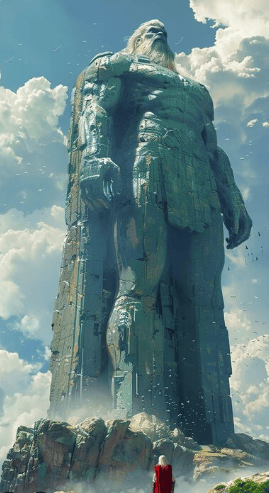
He also appears to be saying the Watchers needed no food or drink and could not be observed which suggests their energetic nature was a kind of Dark Matter conception able to physically manifest and disappear at will. Initially they lived in harmony with the Earth. however they became increasingly interested to incarnate themselves and did so by impregnating the female version of Man then present on Earth. The Watchers caused the birth of physical giants who Enoch tells us ruled the Earth and calls them the Nephilim. Their environment we are told was ‘The Garden of Eden’. And that can mean the Nephilim occupied the Earth for many thousands of years. This is the birthing period of ‘Adam’ whose intended purpose was to live in harmony with of all forms of Earth life.
In Genisis we are told that the first Man Adam was created from the dust of the ground and ‘God’ breathed life into him, and given that Adam disavowed ‘God’s’ purpose by eating along with Eve the ‘apple’, the question that arises here is – was it THE ‘God’ (all powerful one and only Creator) or was it the sons of ‘God’, the Watchers who created Man? If so, then the Serpent, described as divine knowledge was the Earth ‘intelligence’ which the Watchers intended to connect with.
Due to the slowing down of the planet’s energy vibrations and their interaction The male and female poles of the androgynous Adam’s nature manifested. Initially the giants physical constitution was androgynous but influenced by the Earth’s energetic nature, brought about by the vibrational order of the Earth slowing, primarily due to tidal dissipation, where the Moon’s gravitational pull creates tides in the oceans and converting rotational energy into heat, their interaction with Earth energies would have polarised their male and female characteristics.
This gave birth to ‘the rib that gave birth to Eve’ as a sexually biased female as Adam then became a sexually biased male. What previously had begun as an alien unobservable form of energy in no need of Earth’s primal energies to feed itself became a physical incarnation that needed Earth formed energies to fuel and procreate. This division of the androgenous ‘Adam’ destroyed the harmony that existed prior. The prior state being the Garden of Eden where ‘Adam’ lived in harmony with the world order. Neither the new ‘Adam’ and the offspring ‘Eve’ could know the ‘right’ form of knowledge harmoniously expressed by the androgenous Adam. In the search for self-awareness conflict ensued. As a result the Garden of Eden ‘disappeared’. Earth knowledge is symbolised by the Serpent. The symbol of the serpent signifies the secret knowledge of renewal and immortality but wrongly understood it can generate destructive dividing forces. Emerging Man is consciously unaware of his birthright.
Intentionally the Nephilim interacted with ‘the daughters of men who they found fair’ and from that coupling produced men of renown whose physical stature was taller and stronger than the human-like population. We should also realise that these offsprings were hybrids and became sexually conflicted on producing children. Such conflict can stimulate a warring nature.
By attributing divine status to the Watchers and their earth-like incarnation, the Nephilim, and describing some of them as rebellious Enoch is saying they broke away from the order of creation that ‘God’ intended for the evolution of the Earth, This is saying the Watchers, and the incarnated giants were intended to occupy the Earth, but some of them caused unnecessary division.
There is no mention of the role of the women ‘Gods’ had sexual interaction with to birth the Nephilim in these biblical accounts, but the female is shown to be prominent in power over men in many mythical stories. Matriarchal led groupings of people flourished, not only in so-called primitive societies, also in the Minoan civilisation (3300 – 1900 BCE) and the Indus Valley civilisation (3300 -1900 BCE) with histories that suggest their influence began in pre-diluvian times. And because all major religions and many myths have given god-like status to female personages having the ability to know the outcome of events, it does suggest the women who had sexual relationships with the Nephilim gave birth to females who were transvestite sexually.
Around 15 to10,000 years ago, the planet was emerging from the Pleistocene Ice Age into the Holocene, a period of more stable and warmer climate. Massive ice sheets, such as the Laurentide Ice Sheet in North America and the Scandinavian Ice Sheet in Europe, were rapidly retreating, releasing vast amounts of meltwater into the oceans and causing global sea levels to rise, submerging low-lying coastal areas and reshaping continental coastlines. This retreat also led to the disappearance of major land bridges that had connected continents during the Ice Age.
Ancient histories and early religious texts from different parts of the world do speak of giants in Asia and the Americas. In the late 1950’s, during road construction in the Euphrates Valley of southeast Turkey, fossilized human remains were uncovered. At the site, an engineer measured a femur (the long leg bone) and reported it measured to be 120 cm (47.24 in.). This giant would have stood about 14 ft tall. South and North America excavations show similar evidence of giants, but modern archaeological institutions refuse to accept their validity, and it has to be said that some such evidence has without doubt been manufactured. One argument denying their existence has suggested that a human over 8 feet tall would not have the strength of bone to support its fleshly weight, but that conveniently ignores the fact our hunter gatherer ancestors in the Pleistocene age had much stronger bones than modern humans. Perhaps this was a skeleton of one of the pre-flood Nephilim offsprings.
In modern times the Sasquatch is a large, hairy, humanlike creature is said by some people to exist in the northwestern United States, and a similar creature, the Yeti, is said to have been sighted and a footprint photographed in the Himalayas. The Old Testament Bible has several entries that refer to giants. Genesis 6:4 states: “There were giants in the earth in those days.” Deuteronomy 2 discusses multiple races of giants: Emims, Horims and Zamzummims. Deuteronomy 3:11 tells about the bed of the Giant Og, King of Bashan. It was 9 cubits by 4 cubits (approximately 14 ft long by 6 ft wide). This giant, the last of the Rephaim clan, was probably about 12 ft tall! In Numbers 13:28-33 the Israelite spies investigated the land of Canaan in preparation for an invasion. They reported a race of giants that made them feel like mere grasshoppers. Their descendants entered the land and conquered these giants (the Anakim). The most popular Anakim giant was Goliath, who stood 10 ft tall (I Samuel 17:4). By contrast, Israel’s King Saul was described: “from his shoulders and upward he was higher than any of the people” (I Samuel 9:2). Yet he was not considered a giant.
The Bible also informs us that Goliath wielded a massive spear, “And the staff of his spear was like a weaver’s beam; and the spear’s head weighed six hundred shekels of iron:” (I Samuel 17:7). That’s over 15 pounds of metal at the end of the spear! A hoard of copper tools and weapons was discovered buried at Kfar Monash in Israel. The axe heads were identified as being identical to those found at Tell es-Safi (Gath). But the huge copper spear heads were the most striking. The archaeological report that published this find claimed the spears were too big to have been wielded and must have been used just for decoration! But the weapons show evidence of having been used, perhaps by one of Goliath’s giant relatives (II Samuel 21:16). These ancient tools are currently displayed in an Israel Museum.
There is creditable evidence of giants in South America, for example in Patagonia. The Spanish during their colonisation of the country called the big-footed giants “Patagones,” which became the basis for the region’s name, described as being 10-12 feet tall. Giant skeletons have been unearthed in the United States. The Mississippian (Mound Builder) civilization was an early North America culture that predated the arrival of European settlers, flourishing from 800 AD to 1600 AD. This culture covered an area from the Great Lakes to the Gulf of Mexico, building thousands of large earthen mounds. In Cahokia, Monk’s Mound is as big as a football field and stands 100 ft up in the air (19 million cubic ft of earth)! The Cahokia Museum displays a series of axe heads that were discovered at the site. The larger ones weigh over 30 pounds and would require a giant to wield them!
Sites like Göbekli Tepe in modern-day Turkey, dating to around 9600 BCE, reveal complex stone constructions, astronomical alignments, and organized labour, suggesting early ceremonial or religious centres. It does not show any evidence of a farming community settlement and whilst there is evidence of hunters occupation one has to question if astronomy and the complex ceremonial evidence was known to the hunter type humans of that period. Coastal areas may have hosted settlements that were later submerged due to rising seas, such as the sunken city of Dwarka in India, dated to around 7500 BCE. This city clearly identified in the Mahabharata, which itself dates back over 3’000 years, previously thought to be a myth, is still being excavated but with increasing certainty it was the city established by the Lord Krishna and eventually lost to the rising seas. Yet again a civilisation entirely removed from hunter gatherer communities said to be our early ancestors.
The Neolithic period, 10,000 BCE to 2,000 BCE, also known as the New Stone Age, is according to known science characterized by the development of agriculture, the domestication of plants and animals, and the establishment of permanent settlements, but it cannot account for the deep knowledge apparent in the ancient carvings recorded in stone. Since the awareness we have of these early societies comes from myths, it would do well to understand what a myth is and how they became part of recorded history.
It can only mean some form of (unlike) intelligence interacted with an early form of our human nature. In the absence of knowing who they were but in knowledge of the powers bestowed, surviving homo sapiens called them Gods.
Another question that should be asked is given the apparent skills in building structures with techniques we still cannot understand in today’s world and having mathematical skills and accurate knowledge of the cosmos, why would the inheritors in the post-diluvian epoch only able to record their ability in the form of symbols and picturesque writing? And nowhere is there any evidence which reveals what these forms of knowledge were. For example; the ability to apparently soften stone, as attested by the Lion Rock in Sri Lanka, known as Sigiriya, a fortress and palace complex, which can be dated back to the 5th century AD when it was built by King Kashyapa I. In the city of Cusco in Peru, lies the walled complex of Saksaywaman. The site is famed for its remarkable large dry-stone walls with boulders carefully cut to fit together tightly without mortar. The stones used in the construction had weights up and above 150 tonnes.
In attempting to timeline and understand the beginnings of Man the meagreness of physical evidence presents challenges which can only be met by an exhaustive analysis of what evidence there is. And as there is clearly a schism of understanding between the physical sciences, anthropology, palaeontology, and religions, it has been my task to interpret what has been recorded in order to establish the most likely causes and effects which gave birth to Man.
Man’s beginnings can be said with some confidence by Palaeontology to have begun some 300’000 years ago and at least 3 versions existed before the advent of Modern Man. Religiously speaking creation myths advise at least 3 versions -before the Fall, before the Flood, and after the Flood. The Popol Vuh creation story describes these as Mud People and Wood People who were succeeded by the Maize People. Mud People are described able to speak but their words are meaningless. They dissolve in water which indicates their bodies were not carbon based. Calling them Mud People suggests their form was elemental and governed by fire. They were destroyed by the Gods as inhabitant failures. Their successors, the Wood People can speak, reproduce, and build houses — but they have no hearts, no minds, and no memory of their creators. A great flood destroys them. Their own grinding stones, cooking pots, and dogs attack them. The survivors become monkeys.
Given this is a description voiced in the language and understanding of post-diluvian people it is saying their own inventions caused their downfall and that other lesser species of animal sought their destruction. By saying they had no hearts or minds is to suggest they did not accept the concept of a higher nature -underlined by the statement they ‘had no memory of their creator’. This does suggest the Wood People were intelligent, but they were ‘narrow-minded’, and those that survived became animalistic in nature. The third iteration of Mankind described as the first human beings were the Maize People who were made from white and yellow maize dough by the grandmother goddess Xmucane, able to think, speak, see, and give thanks
The Popol Vuh tells us they were the ancestors of the K’iche’ people a post-diluvian civilisation before Columbia was created. Xmucane was along with Xpiacoc the original creators. By calling them the Maize people they are saying the human being who could think was born out of the Earth with the ability to create and with awareness of their creator -hence the ability to think, speak, see, and give thanks. What the Popol Vuh doesn’t directly say, any more than does other creation stories, is the forms of Man succeeded by the ‘thinking’ Man inherited the ‘essence’ of his forebears.
All creation stories speak of the downfall of Man and all subsequent religious and philosophical works -bar some philosophical tracts in the 18th century onward emphasise the importance of God belief and advise non-believers that Hell awaits them after death, which to put it in simple terms means if you don’t know yourself you do not know God (your beginning).
The demise and destruction of prior civilisations all point to a failure of understanding and given our own civilisation is most likely to fail too it does suggest the human being is ‘wired up’ wrongly. A fundamental shift is required to right the wrong. Religions and philosophers have been trying ever since our survival of the Great Flood to advise how this can be achieved.
And now in the 21st century with our planetary sources of prime energies plundered and our usage poisoning the atmosphere, populations exponentially increasing generation after generation, technology becoming self-enabling, and people knowing less and less about themselves, we must solve the puzzling problem that leads to our self-destruction.
And can we?
Yes, we can but it does require a fundamental shift of consciousness. Are we ready to do that? No, we are not. One can only hope and pray (if you really know how to) we don’t destroy ourselves before we can. In part 6 which concludes this series I take a closer look at Enoch’s writings, which some have described as the Anti-Christ, propose how in reality Man did come into being.
Two buzzards soar gracefully in the sky, gliding effortlessly over the landscape. Suddenly, they dive silently, showcasing their hunting prowess before vanishing. Representing ancient harmony, these majestic birds embody nature’s order, contrasting the human-dominated world below, and stand as the Lords of the Sky.
God is credited with knowing everything before it happens, but it is clear from what God is said to have done He made a mistake.! And then with the help of the Archangels, He punishes the ‘fallen Watchers’.
Some will describe Adam’ fall from grace after eating the apple as a loss of innocence. Innocence as the dictionary defines it means someone who is not guilty of a crime. A person not having much experience of life and not knowing about the bad things that can happen. It can also describe someone who is righteous, who is free from fault, it can even be used to describe a simpleton or idiot. According to the OED the word innocence is occurring only 7 times in modern written English, or to put it another way, is saying almost never does our consciousness consider its meaning as important or relevant.
And then when it does get used it mostly occurs to highlight the antonym guilt or faintly praise the idiot!
I am focussing on the meaning of innocence because neither Adam nor Eve were aware of the consequences from eating the apple. That is saying their psyche prior to eating the apple did not include the animal nature. They are described in Jewish literature as the first Man and Woman -and conceived by ‘God’, and as I have already given reason ‘the sons of God’ in fact was the ‘Watchers’ as named by Enoch, and they are shown to have produced sons, which initially was the Nephilim and then after the fall of Adam and Eve the patriarchal line of Men succeeded and that includes Enoch.
The names of men given in Jewish Literature prior the great flood are singular but are they? They are more likely names of populations. The cycle of time from Adam, Cain, Abel, and Seth is recorded in hundreds of years, but given these are names of populations, more like thousands of years.
The Garden of Eden as created by God for Adam appears to be a utopian paradise but on closer examination suggests otherwise. Animals lived there and they are subject to life and death, as indeed are all other forms of life, so the garden couldn’t be called a paradise. Adam is created immortal to live in this so-called Eden and given ability to name the animals and care for the animal’s well-being. At this point in the story God has created a world which is subject to change -conflict that includes all other forms of life supporting the existence of animals.
God then highlights to Adam two trees; the tree of life and the tree of knowledge. Clearly He doesn’t mean physical trees. Symbolically trees represent a life-giving entity connecting earth to the heavens. Adam was directly related to the tree of life and warned not to connect with the tree of knowledge. The tree of knowledge was the enablement of the tree of life; its function was God’s business alone. Provided Adam didn’t question his immortality by knowing of the tree of life the Garden would continue to be his abode.
Then it appears that God made two errors, firstly he realised Adam wasn’t entirely happy without a mate, and secondly on creating that mate as Eve He made her separate from Adam, which caused Eve to see Adam as another form of immortality, and to gain awareness of the difference between them sought that understanding from the knowledge tree. On receiving that knowledge (the apple), she shared it with Adam, and then all hell breaks loose.
The story blames the serpent for causing Eve to eat the apple and beginning the fall of Man, but NO the action of the serpent is the action of the id force in the body otherwise called the kundalini force and was caused by eating the apple; the knowledge of how the tree of life functioned in vertebrates. The introduction of Eve in the story is describing the juncture of change that brought about the separation of the male and female forces, that in turn destroyed the harmony which had been established initially by offsprings of the Watchers.
As advised in Part 3, Adam must have been some kind of androgynous conception, not unknown in the early development of life of Earth. Many other earth-life forms exhibit androgynous traits through sequential sex changes, including fish, mollusc’s, amphibians, and invertebrates.
Science emphasises the androgyne functions of its male and female nature in humans are by choice and for all other forms of life instinctually driven by the need to survive as a species.
Before proceeding further we should recognise that the writing of Genisis and the Book of Enoch is still subject to scholarly debate. Genisis is thought to have been composed during the lifetime of Moses, between the 15th and 13th centuries BCE, others suggest the 5th century BCE, whilst others say even later, influenced by the Dead Sea Scrolls 2nd century BCE. And the Book of Enoch between 300- and 100-years BCE. All scholars agree input to either would have been created by orally informed information. Which, to put it mildly, means we don’t know the source nature of these writings.
Given we now look at the creation of man story in Genisis through the words of Enoch 1 (as translated by Andy McCraken in 2023 ) which is based on the Ethiopian text and including some corrections from the surviving fragment found in Aramaic and Greek, a different story emerges.
Enoch begins by saying his words are a blessing to the chosen and righteous who must be present on the Day of Distress, which is appointed for the removal of all wicked and impious. What Enoch means by the Day of Distress is a final reckoning at which the righteous will be saved and the wicked will be destroyed in a distant generation to come. He then goes on to say, “And all will be afraid, and the Watchers will shake, and fear and great trembling will seize them, unto the ends of the Earth”. He is not saying they will be destroyed.
After advising the destruction of the Earth and how the righteous will be saved, in chapter 6 he says, “And it came to pass, when the sons of men had increased, that in those days there were born to them fair and beautiful daughters”. And then goes on to say, “And the Angels, the sons of Heaven, saw them and desired them. And they said to one another: “Come, let us choose for ourselves wives, from the children of men, and let us beget, for ourselves, children.” He clearly means the Angels are the Watchers and the sons of Man are an evolution of Homo Erectus. Enoch specifies 20 Watchers by name and their leader is Shemyaza. Each named Watcher leads nine others, and there are more Watchers, but he doesn’t quantify how many or give them names.
At this point in his narrative the Watchers are able to interact with the physical world as he further describes the knowledge and skills they taught Man. From sexual union with the daughters of men there were born giants, describing them as 3’000 cubits tall that’s as tall as a mountain! As they obviously couldn’t be, he is either saying the number of giants, or he referring to their powers to control nature. They were certainly controlling as they ‘devoured’ men and all other forms of life and are further described as the ‘lawless ones’.
In chapter 8 we are told that Azazel, one of the named Watchers, “taught men to make swords, and daggers, and shields, and breastplates. And he showed them the metals of the earth, and the art of working them, and gold and silver bracelets and ornaments, and the art of making up the eyes with antimony and eye-paint, and of beautifying the face, and the most precious and choice stones, and all kinds of coloured dyes. And the world was forever changed”. (my italics).
He goes on to say. There was great impiety and much fornication, and as if Azazel hadn’t done enough, “their leader, Shemyaza, taught spells against the mind, and the use of cut roots of plants, and Armaros magical skills and the release of spells, and Barakel taught astrologers, and Kokabel portents of the stars, and Tamiel taught portents of the weather, and Shahariel taught the path of the Moon. And they all began to reveal these mysteries to their wives and their children. And, at the destruction on the Earth, men cried out, and their voices reached Heaven”.
At this point let me summarise what Enoch is saying.
He begins by saying there will be a final reckoning when the Earth will change dramatically because the rebellious sons of God (the Watchers) will bring about destruction because they have caused their offsprings, the giants to teach men eternal truths. And the world is forever changed because of their ‘destructive’ actions. Thereafter some men who are not in league with the Watchers and their Giant offsprings complain to ‘God on High’ (my italics).
In chapter 9 we are introduced to Archangels Michael, Uriel, Raphael, and Gabrial. Michael is chief, protector of humanity, and appointed to bind the ‘fallen Watchers’. Uriel is humanities guide warning Enoch to instruct Noah of the impending flood. And Gabrial is the divine judge who will condemn the ‘fallen Watchers’ and enforce heavenly order on Earth.
We should now remind ourselves that the first five chapters of Genisis records how got made the Earth, created Man on the fifth day and concludes by telling us that Man was expelled from the Garden of Eden because he ate the ‘apple’ of the Knowledge Tree. Then in chapter 6 to 11 we are told the Sons of God took women to become their wives, birthed a race of giants who behaved badly, despite describing them as heroes and men of renown, where everyone spoke the same language.
Now God admits he made a mistake and vows to wipe them from the face of the Earth, which he apparently does by causing a great flood after deciding that Noah and the animals can be saved. When the ark finally settles in the mountains of Ararat humanity can begin AGAIN.
What Enoch and Genisis is telling us is the creation of Man begins with a sexual union between women and ‘Angels’ which turned out badly and a higher form of angels, namely Archangels put matters right by destroying all that went before by causing a great flood. As it is stated in Enoch chapter 9, “Shemyaza has made known spells, he to whom You gave authority to rule over those who are with him”. YOU can only mean “Lord of Lords, God of Gods, King of Kings!”.
God is credited with knowing everything before it happens, but it is clear from what He goes on to say, with the help of the Archangels, He made a mistake and the ‘fallen Watchers’ will be punished. Note Enoch is now using the term fallen Watchers which implies not all Watchers behaved badly!
Enoch underlines this division of Watchers in chapter 12 where he states the Watchers called and said to him, “Enoch, scribe of righteousness, go and inform the Watchers of Heaven, who have left the High Heaven and the sanctuary of the Eternal Covenant, and have corrupted themselves with the women, and have done as the sons of men do, and have taken wives for themselves, and have become completely corrupt on the Earth. They will have on Earth, neither peace, nor forgiveness of sin, for they will not rejoice in their sons. The slaughter of their beloved ones they will see; and over the destruction of their sons they will lament and petition for ever. But they will have neither mercy nor peace.”
Make no mistake, what Enoch is telling us is the Archangels are the holy ones and also they were part of the Watchers. Some good came out of the Watchers interaction with the emergence of physical man.
Where did it go wrong?
We need to answer that question and by doing so look at other creation myths to understand how compatible they are with the biblical narrative. Why for example was Cain the first son of Adam condemned to wander for ever? Birthing the concept of what we call the Wandering Jew?
This poem was inspired by the opening lines of Max Ehrmann’s poem Desiderata. “Go placidly amid the noise and the haste,
and remember what peace there may be in silence.” Desiderata is Latin meaning ‘things desired’.
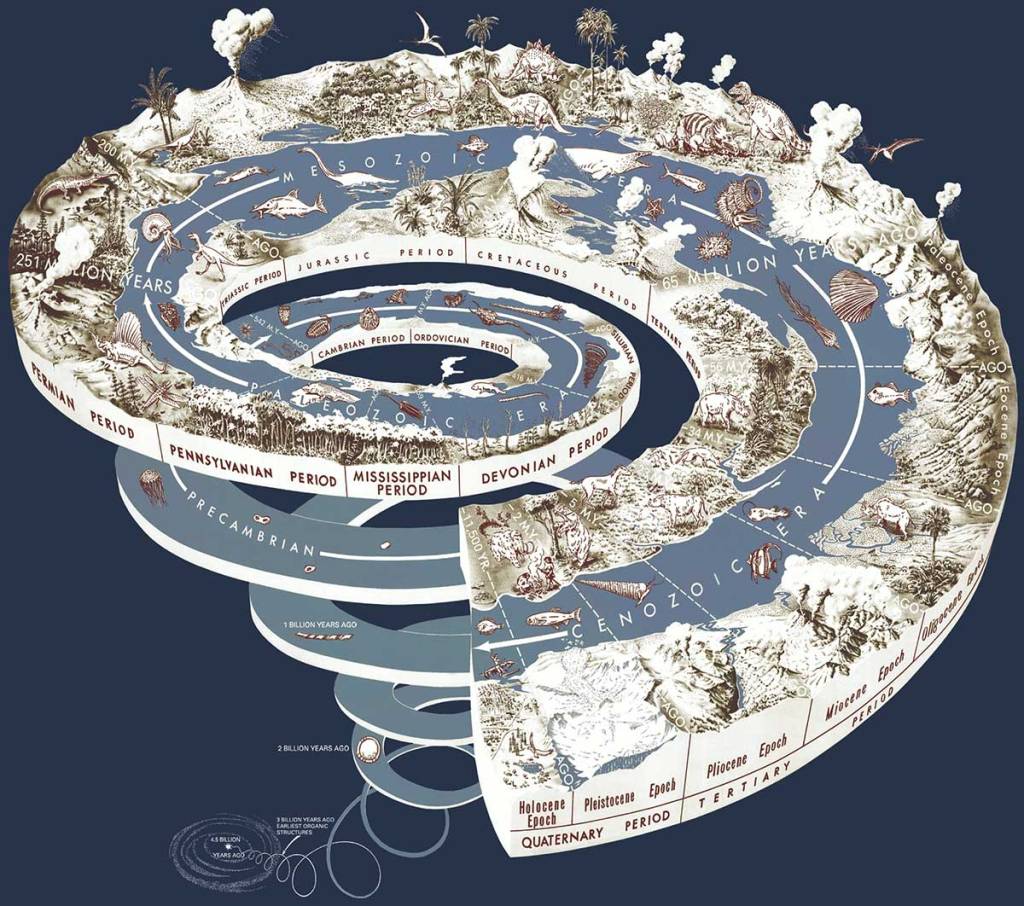
How and when was Man physically created? Homo erectus (“upright man”) appeared around 1.9 million years ago and persisted until at least 110,000 years. Homo erectus is widely considered an ancestor of later humans.
According to science reflective consciousness is the capacity to be aware of and critically evaluate one’s own mental states, enabling self-reflection, metacognition, and intentional behaviour, which is a human definition of itself. We further distinguish reflective consciousness from primary or phenomenal consciousness which involves raw sensory experience.
I have said that reflective consciousness, albeit that is inclusive of phenomenal consciousness, is a feature of all vertebrates -we can go further than that! For example, plants don’t feel pain, but they can sense damage and respond with complex chemical and electrical signals. In short; all forms of life have consciousness that is reactive to change and that is because we live in a light reflective world. So, Man defines it for himself but chooses not to recognise it as consciousness in other forms of life. The issue of understanding here is that Man thinks of himself as the only form of vertebrate life that has consciousness -at least of the kind he defines for himself. Yet again, Man is myopically viewing the universe through his rationally minded ego, which is uniquely present in Man.
How and when was Man physically created?
Homo erectus (“upright man”) appeared around 1.9 million years ago and persisted until at least 110,000 years. Homo erectus is widely considered an ancestor of later humans, including Homo heidelbergensis, which in turn gave rise to Neanderthals, Denisovans, and Homo sapiens. Homo heidelbergensis lived approximately 700,000 to 200,000 years ago across Africa, Europe, and possibly Asia. Neanderthals, Denisovans and Homo sapiens were closely related human species as a result of interbreeding, with distinct physical, cognitive, and cultural adaptations, but only Homo sapiens survived to populate the modern world. Homo sapiens have demonstrated remarkable adaptability and innovation. The earliest homo sapiens (according to Anthropology) were hunter-gatherers, and around 13,000 years ago, the Neolithic Revolution introduced agriculture and permanent settlements -and that is the beginning of the Flood period that ended approximately 9’000 years BCE.
Homo Sapiens (Latin) means ‘wise man’. Clearly an egocentric definition. Neanderthals existed from roughly 430,000 to 40,000 years ago, coexisting with early modern humans for tens of thousands of years. Both Neanderthals and Denisovans demonstrate the complexity of human evolution and the interconnections among archaic humans. DNA studies have looked for ‘strings’ that have remained relatively stable for eons but had exploded into evolutionary action since we and chimps diverged from our common ancestor.
When we look to see what might have changed us into Man there are many references in so-called mythical writings which refer to a union between god-like beings and ‘Men’.
The acceptance of God(s) creating Man is fundamental to the concept of all major religions, but they cannot tell you why God(s) chose to do so. Myths are accounts of events and the actions of peoples, gods and forces, from periods of time before the ‘discovery’ of writing, the earliest form of which was Cuneiform, developed by the Sumerians around 3400–3100 BCE. However, the historicity of ancient stone structures and of symbols engraved upon them can be carbon-14 dated, as for example the construction of Stonehenge shows its origin was approximately 10’000 years ago.
The intelligence of peoples who built these ancient structures encompassed knowledge which accedes in some respects the knowledge we have today. How they came of this knowledge is mystery, as is their accurate detail of the solar system and star world known thousands of years prior to Galileo. Myths are records of a past memories verbally passed down by succeeding generations in different parts of the world, showing comparable events and God-like Beings in prehistory, which cannot be explained historically by global interaction of information. Even as late as the 20th century there were families in Asia who attested to a historical line of ‘story tellers’ who faithfully passed on their knowledge to subsequent generations -stories that cannot always be dated to have occurred after the creation of writing.
What we are told in the Old Testament e.g., in Genisis 6:2 is … the sons of God saw the daughters of Man were attractive. And they took as their wives any they chose…. And in the Book of Enoch, the “Sons of God” are often identified as angelic beings, specifically referred to as the Watchers. They are described as descending to Earth and becoming enamoured with the daughters of men, leading to the birth of the Nephilim. The Nephilim are also mentioned primarily in Genesis 6:1–4 and Numbers 13:33. In Genesis, they appear in the context of the “sons of God” mating with the “daughters of men,” producing offspring described as “mighty men of old, men of renown” (Genesis 6:4). . In Numbers, spies report seeing the Nephilim in Canaan, describing them as so formidable that the Israelites felt like grasshoppers in comparison.
Interpretations of the Nephilim vary widely across religious and academic traditions. One influential view, preserved in Second Temple literature such as 1 Enoch and Jubilees, identifies the Nephilim as the offspring of rebellious angels (the Watchers) and human women, portraying them as destructive giants whose corruption contributed to the moral decline preceding the flood. Another major interpretation, found in some early Jewish and Christian commentaries, describe the Nephilim as powerful human rulers or warriors, possibly arising from intermarriage between the righteous line of Seth and the unrighteous line of Cain. A third approach views the Nephilim as legendary or symbolic figures reflecting ancient Near Eastern traditions about semi-divine heroes or primordial beings.
The concept of gods mating with men is a common theme in various mythologies and religions, for example, in Greek, Indian, and Islamic Mythology. Human Science has found it’s impossible to date even approximately by tens of thousands of years when this era could have occurred. Modern man can be estimated as beginning his cycle of development some 300’000 years ago, but we have no archaeological dating of discoveries or Human Science that can reliably advise existence of the ancient civilisations previously referred to.
However, what we can say is some basis of attraction enabled the union of Gods and men, It’s reasonable to suppose that Gods expressed that need, which also suggests that whilst myths show their interaction was to ‘make men wise’ (Homo Erectus?) it also must mean they were not entirely self-contained, having a balance of energies eternally present . There is a tendency amongst scholars to suggest the actions of Gods was arbitrary and at best to suggest humans were ‘engaged’ to facilitate and further the warring of Gods between themselves.
The Hebrew bible refers to these Gods as the Elohim, which means many gods. And Enoch calls them the Watchers, a group of Angels who rebelled against God and fathered the Nephilim. Less the ideological interpretation it means an intelligence (not necessarily an entity in human form) mated and influenced development of the DNA in early man.
There are many creation myths. The most widely known account by English speaking people is the Garden of Eden story told in Genesis, often interpreted as a theological narrative explaining humanity’s transition from innocence to moral awareness, introducing concepts of sin, suffering, and mortality.
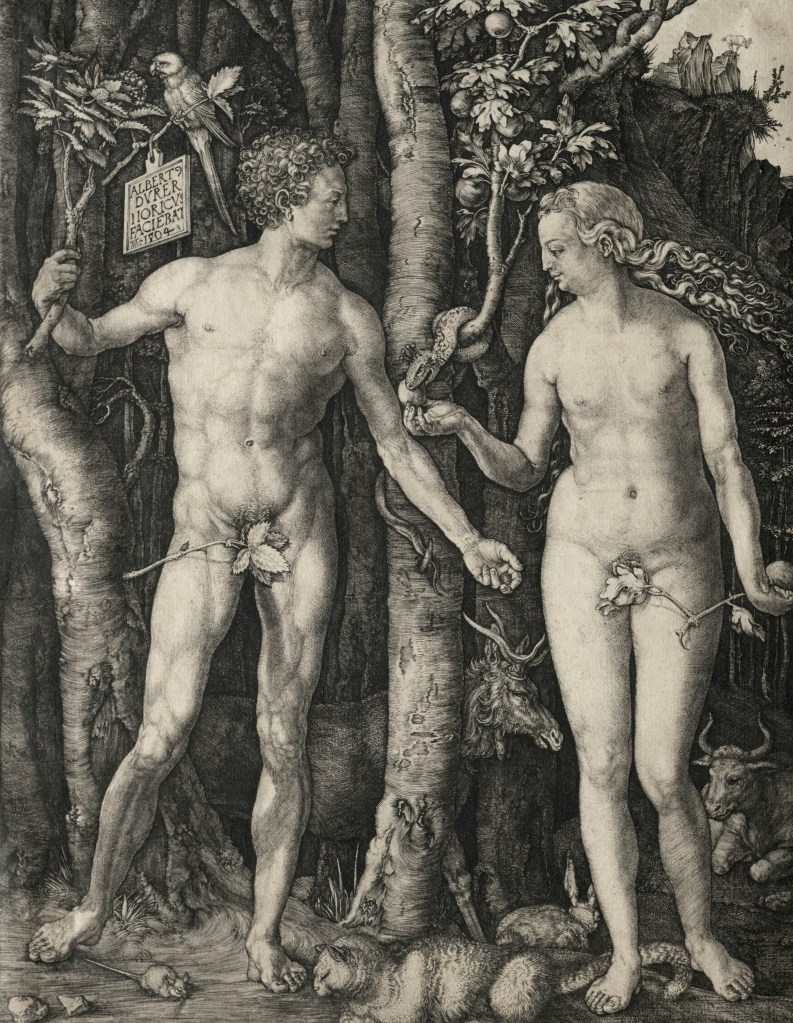
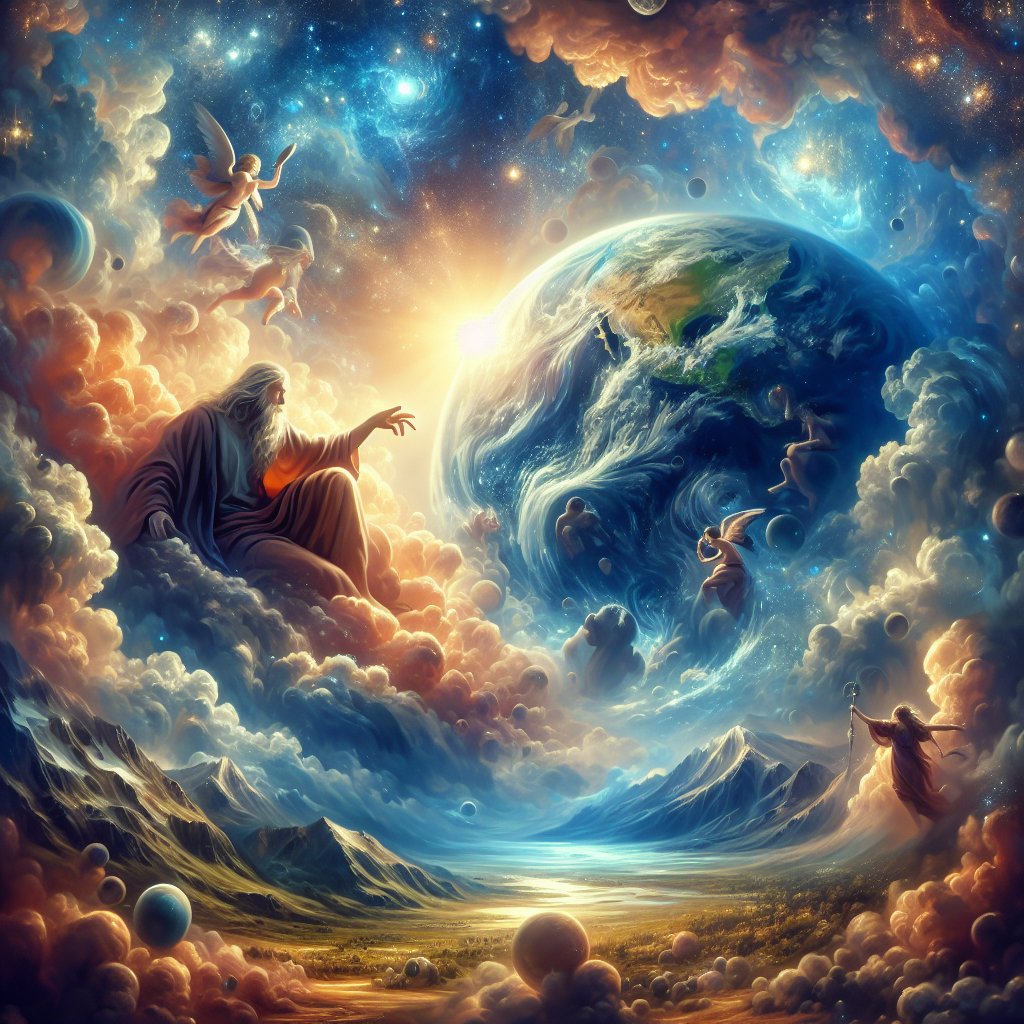
According to Genesis, God created the first man, Adam, from the dust of the ground and breathed life into him, forming the first human being (Genesis 2:7). God then created the Garden of Eden, a lush paradise in which the tree of knowledge of good and evil was at its centre. Adam was directed to tend the garden, name and care for all the animals. Seeing that Adam needed a companion, God took one of his ribs, and created Eve, the first woman (Genesis 2:21-24). Naked and unashamed they enjoyed the harmony of the garden, until that is, the appearance of a serpent, who deceived Eve into eating the forbidden fruit from the tree of knowledge of good and evil. She then shared the fruit with Adam, and upon eating it, they became aware of their nakedness and felt shame, symbolizing the loss of innocence and the acquisition of moral knowledge. God punished them for their disobedience causing Eve to experience the pain of childbirth and be subject to her husband, while Adam would ‘toil the ground’ for sustenance. Clothed in animal skins they were expelled from the garden and prevented from returning.
And where was this Garden of Eden? Traditionally it’s believed to have been located in Mesopotamia, near the confluence of the Tigris and Euphrates rivers, but there is no archaeological evidence to suggest it was. The only evidence we can be certain of was it could only have existed prior to the great flood, perhaps even 100’s of thousands of years before.
And what exactly is the story telling us?
In simple terms, less the theological interpretation, the story is saying God created the first man for the task of managing the Garden of Eden. Initially all was hunky dory with Adam doing exactly what he was born to as a caretaker, until God decided Adam needed a mate and created Eve from one of Adam’s ribs. Now the trouble starts. God warns them not to eat from the Tree of Life, but Eve doesn’t take God seriously and eats an ‘apple’ from the Tree. Adam doesn’t do anything to stop her and worse still actually eats an ‘apple’ as well. God is furious and causes Adam to seed her with his sperm causing Eve ever after to suffer the pangs of childbirth. They both became aware of themselves being naked. Adam has to ‘husband the soil’, which means he and Eve needed food to survive and that involved killing animals which hitherto he had been friendly with. Not content with lowering their status God banishes them from the Garden and for good measure posts an Angel at ‘the gates’ with the express purpose of denying them entry should they attempt to.
I think you have to agree things didn’t go according to plan. We have to seriously question who God is in this story because as told He is clearly not omnipotent. As told He either intended to cause disunity, or He simply cocked it up!
Who is this God? In other creation stories the advent of Man is described as caused by divine or supernatural beings. Nowhere do these myths admit to omnipotent powers making mistakes. The blame for the outcome is firmly placed on the Serpent. Now, if we look at the Garden of Eve story, less its theological interpretation. where ‘God’ is an ‘intelligence’ that could be described as a group of beings with interest in ‘creating ‘ human beings, a different story emerges.
Could these ‘beings’ be the Watchers referred to by Enoch?
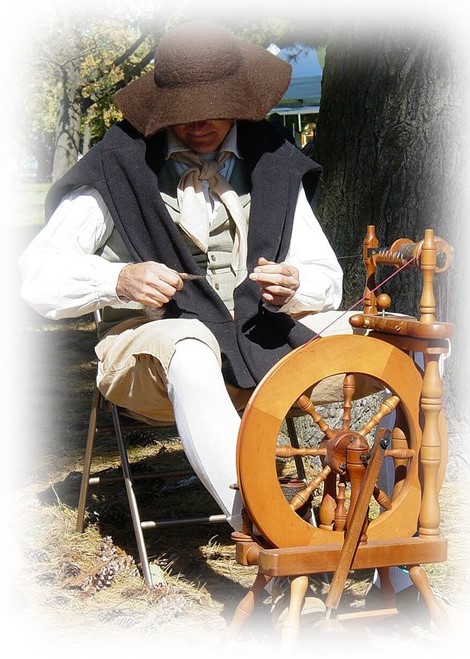
As any weaver will tell you, whether they weave to be paid or weave for their own needs, the action of weaving is a kind of meditation.
The weaver bending arms of twisted knotted yarns serves the loom and the loom a pattern makes. And bent upon the stool, his eyes direct upon the thread between weft and weave, his vision skips.
The shuttle smooth moves through the shed to the clack of treadles pressed; feeling more than seeing, every bone reactive To the rise and falling weaving shafts.
The sun arcs through the window overhead dying unnoticed in the west and in the cool unseen light of night, clouds arise to hide the stars. Bobbins twirling empty are replaced.
He labours not for kudos or for rates. As every yarn entwines it speaks; heddle and treadle selecting straighten out and the loom alive a drumming music makes.
Star and sun dance light within his bobbing head; the weavers’ needs are met and the soul unfurls. Love that has a thousand-silent sounding ee’s Spins on to weave for all eternity.
To understand why the nature of man is different from other species, we must first establish what our differences are from the primate world we physically evolved from….
Man’s inner characteristics are altogether different from the ancestral root which governs other species. Why then is he so different?
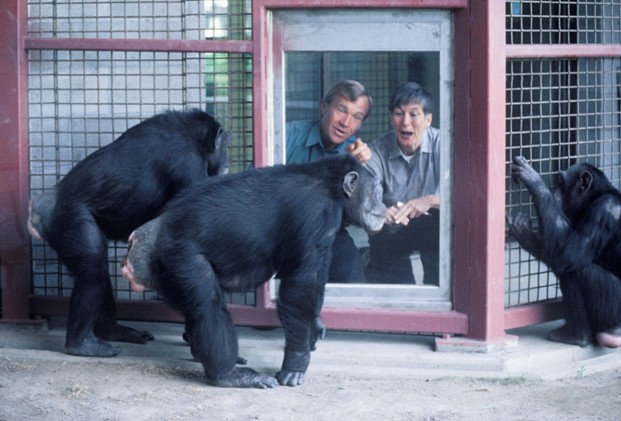
To understand why the nature of man is different from other species, we must first establish what our differences are from the primate world we physically evolved from. Our closest ‘relatives’ the apes, gorillas, and chimpanzees are like Man, family orientated, having respect for the hierarchical order of age and experience and are protective of their environment to ensure the safe upbringing of their young and provision of food. They do not desire to dominate other species or their like and will only kill or disable to protect their kind and the territory which enables their way of life. Their memory is instinctually formed from community needs. Their ego which is part of the mind that mediates between the conscious and unconscious is instinctually driven by their ancestral nature.
Human beings will go further to engage and unify with different kinds of people. They practice the hierarchy of blood ties but will not allow procreation to govern hierarchies of order considered necessary to defend the interests of like-minded need. They have an innate desire to dominate and control other species, and memory goes far beyond the need to remember place, person, and life-giving support. The ego that mediates between the conscious and unconscious is guided by two concepts which often war with each other, namely a need to understand rights and wrongs and the belief in their self-creation; I am what I am.
Whilst the environment engenders Man’s survival instinct so also does his self-awareness which ultimately governs his survival needs. It is evident from recorded history the ego of Man is intent on self-creation. Whilst conceptual values are broadly common across all ethnically different populations, conscious interpretation to effect the superego varies widely. Whilst Man’s instinctual nature to survive is primarily engendered by the environment, it is the ego which decides the cause of threat, the outcome of which will always be predicated by the awareness of Self as understood by the ego.
Because the ancestral nature of Man is elemental in origin it means that the id -source of all his instinctual expressions can never be fully rationalised. In practise Man’s rational mind is constantly attempting to balance the promotion of his superego with the instinctual irrational impulses that are generated by his ancestral heritage.
The result? He is continually in conflict with himself, which is why history keeps repeating itself, or as some would say he never learns….
The Darwinian evolution theory states that species evolve over time through natural selection, where advantageous traits increase an organism’s chances of survival and reproduction. Molecular biology and genetics have confirmed physically formed evolutionary relationships, such as the close genetic similarity between humans and chimpanzees and acknowledges all living organisms share common ancestors, but the sciences are unable to explain how the uniqueness of man’s evolution was caused or why his egocentric development is so markedly different to our nearest physical ancestors. Survival of the fittest does not give an adequate answer. And so it follows his relationship with the environment is different to all other individualised life species.
In addition to individualised species, perennial plant life is by far the most widespread kind of life on Earth. Man does not describe it as having consciousness as he defines that only able of a species who is consciously aware of evolving self-creatively; the ‘I think so I am’ argument. Perennial plant life and its interactivity with the elements of fire, water, air, and earth have a major influence on Man. In accordance with seasonal life cycles, weather conditions, and cosmical influences, the perennial life world can undo and destroy Man’s physical creations.
And as Man’s sensorial nature is directly influenced by environmental changes they do affect the balance of the mental and emotional order of his mind. It is accepted many species have conscious awareness of impending change, both internally and externally before they become physically fact. Man however is overly dependent upon the rational mind to advise conscious awareness and will dismiss or repress the instinctual response which is trying to advise him.
His inability to consistently channel instinctual awareness is entirely due to the development of his rational mind which restricts the id of his consciousness the ability to express awareness of his ancestral memory, implicit to his DNA. This points to a fundamental difference between himself and other forms of Earth Life, all of whom maintain awareness of their ancestral mind as expressed by their instinctual nature.
Is it possible that some form of unearthly life affected the development of Man, and were causal of the difference between himself and other forms of Earthly life? We know the Earth has historically been impacted by meteors, fireballs, solar flares, and planetary gravitational pulls, altering land and sea masses, their vibrational nature absorbed into the Earth’s crust, but such physical and neo-physical phenomenon would also have influenced all other life forms, including our nearest ancestors.
To understand why humans are a uniquely different species and regard themselves as the Overlord of all other Earth forms of life we need to understand the nature of his consciousness.
Scientific research has been said to say some individual species don’t know they exist because they don’t possess reflective consciousness, i.e., the ability to know the self, and because they are driven by and totally possessed by the id. We should not accept this analysis because the instinctual self as manifested in a moving form exhibit both physiological and behavioural responses ultimately aimed at propagation which is compulsively selective. This means that vertebrates have awareness of what their need demands and that is a form of reflective consciousness.
And any form of reflective consciousness, whatever the species, is a form of mind that interacts between the id and the superego. So, for example because a fish can feel pain it does so because it possesses reflective consciousness. Some animals, including our nearest mammalian world relatives the chimpanzees have well-developed egos, a strongly developed interaction between their id and Superego which for them is a function of their societal memory and parental standards.
So how does Man’s reflective consciousness, the awareness of self, differ from his nearest mammalian relatives? In our own terms we describe our consciousness as the awareness of one’s mental states arising from the interactivity of the ego enabling the evaluation of thoughts, feelings, and experiences. And this differs in one critical aspect to the highest form of ego development in our nearest genetically comparable species, the chimpanzee, namely it is the ability to be selectively aware of our own mental states and decisively able to change their order and priority. Whereas the chimpanzee capacity to change order and priority is governed by the id’s memory reception. To put it another way their behavioural responses are predictable.
It is not because human brain is three times larger, but because it operates differently. Recent studies have shown that whilst we share anywhere from 96-99% of our DNA with the chimpanzee there are areas which instead of producing proteins, act by changing the formation and tactics of protein producing genes, which in simple English means humans have a DNA structure that enables thinking!
Am I saying that Chimpanzees don’t think? No I am not. What is different in Man is his ability to reason, whereas the chimpanzee only considers and decides on need. When human beings reason they invoke the order of their self-centred ego, which is forever unsatisfied with the responses!
Man is not only a physical form of life. From his beginnings his soul nature is rooted in a higher Self. This Villanelle questions our ability to understand and accept our true nature.
Beyond the Stone Man lives a psychic sea wherein thespian arts are founded on the whisperings of immortality.
Earth genius, maker of machinery hear before claiming, my invocation beyond the Stone Man lives a psychic sea,
thesaurus more precious than history, an interlocking alien kingdom: the whisperings of immortality.
Stone Man, creator of insanity repeat after me this incantation, beyond the Stone Man lives a psychic sea
where sceptres and crowns were facsimile long before Archimedes heard in song the whisperings of immortality.
Knights and Bishops, guardians of the Tree, Knowledge, and Faith; have you now forgotten beyond the Stone Man lives a psychic sea?
Of mistakes made in your liturgy by making your God of wisdom, to wrong the whisperings of immortality?
The nature of Man has evolved over millions of years, changed by environmental conditions, by the response of his instinctual nature and by the actions of his ego. Man’s inner characteristics are altogether different from the ancestral root which governs other species. Why then is he so different?
The nature of Man has evolved over millions of years, changed by environmental conditions, by the response of his instinctual nature and by the actions of his ego. The DNA of all earthly forms of life, Amniotes, Synapsids, Mammals and Primates are present in Man, which is clear proof that the birth of Man was earthly by nature.
Man describes himself as more evolved than any other form of earthly life, and that is an assumption based on having 20 times more DNA than a chimpanzee, able to express his consciousness self-aware, and knows his rational nature is not shared in any superior way with our nearest primate ancestors. It is an assumption because after you allow the knowledge we have acquired in researching our DNA and the genomes of other species, there is still more unknown than known of the purpose and action of DNA in Man. Our self-interested view of other species assumes Amniotes, Synapsids and some mammals don’t know themselves because they have (as we say) no self-awareness.
Physics only began to accept in the 20th century the root nature of energy is not physically based. The huge spatial state in the atom between physically identifiable neutrons, protons, and electrons, previously described as ‘space’ manifests Black Matter influenced by an unknowable force now called Dark Energy, both of which influence the functional nature of Light Matter. Whilst Astrophysics and Particle Physics can provide evidence of Black Matter and point to the existence of Dark Energy their true nature continues to elude definitive understanding.
Understood or not it throws into question the evolutionary nature of all forms of life, not least being Man. Man is undoubtedly different and able to control the development and action of other species in the Light Matter world of Earth but is he truly aware of his own design and purpose? The physical nature of Man has evolved from the branch of primates known as Haplorhini that subsequently split, separating the New-World monkeys and apes from the Old-World monkeys and apes 30 – 40 million years ago. The distinctive features of the Catarrhini apes and monkeys with downward pointing nostrils found in Africa and Asia clearly indicate they were the ancestors of Hominoidea linage of apes that were evolving 25 to 30 million years ago who are more directly our ancestral lineage.
Early man’s existence is evidenced by discoveries in the Middle East that date from 17 million years ago, and onward into the Neanderthal and Denisovan periods between 430’000 and 25’000 years ago. Cataclysmic changes that altered land masses and seas and long periods of extreme temperatures causing the demise of dinosaurs and many other primates would have destroyed some forms of early Man. The environment was a major influence determining that only the fittest survived, but was that due their intelligence as well as physical hardiness? Whilst we can be reasonably sure with DNA evidence how a hybrid form of Man become the Modern Man, science cannot read from physical remains how their minds behaved.
Evidence from early forms of human recorded communications (albeit these are described as Myths and Folklore) posit the existence of human civilisations in Lemuria, Atlantis, Hyperborea (north polar region), and Adamos (south polar region) in the pre and post Deluvian period which approximates to the ending of the Younger Dryas age 13’000 to12’000 BCE.
This ‘evidence’ which has mainly survived in myths, folklore, symbolic writings, and physical building remains, in the post-diluvian epoch clearly advises a difference of evolution between their inherited societies and the hunter gatherer communities of men who lived in the same and subsequent periods of history. This dichotomy cannot be resolved by tracing alternate routes of human evolution from the known history of Earth life development.
Scientifically we cannot confirm the existence of these ancient civilisations, but neither can we cannot entirely debunk the mass of archaeological evidence of intelligent human societies that predate recorded history and show the existence of intelligent beings on Earth prior to the cataclysmic floods that occurred following the end of the last major glacial period known as the Last Glacial Maximum 20’000 years ago. As Earth’s climate gradually warmed, the glaciers in the north of North America, Europe and Asia began to melt. Vast quantities of water flowed back into the oceans. Over thousands of years, sea levels rose steadily. Between 15’000 and 8’000 years ago sea levels rose rapidly enough to flood huge areas of land across the globe.
Stories of the flood appear in many cultures, such as the ancient Mesopotamian epic known as the Epic of Gilgamesh, the biblical account of Noah’s family and of animals saved from the flood, the story of Deucalion and his wife Pyrrha, who survive a world-destroying flood sent by the gods. In Hindu tradition, a similar story describes Manu being warned by a divine fish that a great flood will soon destroy humanity. Flood narratives are also in the folklore of the indigenous cultures of South and North America, Australia, Africa and Asia.
In all these stories and myths evolved Beings were (a) aware of the floods before they happened, and (b) they taught the Homo Sapiens survivors how to reclaim good soil, domesticate plants and trees, learn building techniques, mathematics, astronomy, and the ability to record their actions in symbolic forms of writing. It is following the great floods that Man as we know him today began to evolve. The intelligent Beings of these myths are recorded as human-shaped Beings with God-like powers, and it was their foresight that saved Modern Man from destruction by appointing emissaries such as Noah in the Bible and Utnapishtim in the Mesopotamian myth how to survive the flood.
The earliest form of recorded history speaks of Gods interacting with humans, and in some accounts birthing gigantic forms of Man with powers able to harness and control the elemental order of the cosmological Earth. The only anthropologic evidence of giants is of primates who lived in subtropical Asia from about 2 million years ago until roughly 330,000 years ago. Upwards of 10 feet tall the (Gigantopithecus blacki) such palaeontological evidence we have indicates they were of the genus of Ape. However, what we do know is Homo Erectus lived in the same period and they may have physically mated. But we have no evidence to suggest their evolution or a hybrid form continued to the Younger Dryas period, the era when the ancient civilisations referred to are said to have occupied large land masses prior to the great flood, however giant men are recorded to have lived both prior and post the great flood.
Man can be said to have become Man when his conception became individualised by the form of ego he has, making him different in consciousness to all other species of Earth life. The consciousness of the individual forms of mammals, Invertebrates, Amphibians, Reptiles, Fish, and Birds are all instinctually developed, the expression of their conscious nature and the awareness of their light form self is governed by the inner characteristics of their species. What one could call their group nature.
Man’s inner characteristics are altogether different from the ancestral root which governs other species. Why then is he so different?
Part two continues to seek answers to this question…
The name Gilda originates as an Italian short form of names like Ermenegilda, which contain the Old Germanic element gild meaning “payment, tribute, or sacrifice” In Old English contexts, it is associated with meanings such as “entire,” “total,” or “sacrifice,” reflecting a sense of completeness or devotion. Another interpretation links Gilda to the concept of being “covered with gold,” emphasizing brightness, value, and preciousness
Cold winds blow in Gilda’s valley; Pine trees bare their branches bowing to the valley sweep, snow drifts in every recess, closing up the cave mouth and the foxes hole.
And when the orbit of the wind dies screaming at the funnels mouth, eerie stillness clings to every pine. The valley has the emptiness of absent birds. Each wind struck
tendril savaged from the bough lies black upon the drifted snow, more alive than dead –waiting change; dissolution in the spring thaw. And for the thrush who fell asleep
cradled in the pine root mosses gently held in the bedding snow, Spring has met the summer sun; Pine trees spread their branches, warm winds blow in Gilda’s valley.
Azoth is an alchemical concept, the universal agent of transformation. In energy terms it is a causal force brought by Dark Energy into Black Matter. It is not time or form bound and can manifest beatifically.
I conceived this poem over 50 years ago. Dissatisfied with the initial draft I did no more but over the years one or two key lines continued to haunt me. Early in June 2024, I managed to fall out of a tree I was pruning. My injuries included my left broken arm, hand, and wrenched neck. As a left-handed person that put a stop to many activities, including writing. Trolling through a listing of unfinished poetry the old draft came back in view. Unable to do much else without help, with one unsteady right-handed finger I began to rewrite it.
The Royal Train is now finished. There are two words in the poem you may not be familiar with, they are Djinn and Yama. Djinn is an Arabic plural noun meaning elemental earth-bound spirits hidden from sight. Yama is the Hindu God of death and justice, son of the Sun God Surya, who judges the souls of the dead and depending upon their deeds, assigns them to the realm of the Pitris, (their soul heritage) or to Naraka, (Hell) or to be reborn on Earth.
Humming gently, whistle muted
The Royal Train arrives,
Auto enabled
and expectant of deaths
it screeches driverless to halt
at Rebirth Platform number one.
Doors open.
Into the darkened interior
you float
light as a feather, half asleep,
jostling to get a window seat.
Dreaming, so you believe
The tangled web you often weave.
You’ll not hear the whistle keening
the train restart
Or know its full and wide within
But you will hear, and feel
the pulsing coupled driving wheels
relentlessly rhyming
abba du by abba du by
abba du by abba du by
Cyclical sounds dispelling time
unfolding memories, child-like
motivating youthful desires.
Easily thoughts become creative
Manifesting a desirous world
pulsating independent forms,
life needy forms that gratify,
satiate, and has you wake
and expostulate
to the rhyming wheels
♫ do what you will, do what you will♫
Is this dying you ask of me
travelling free able to see,
testifying
life doesn’t end?
To begin it’s all picture postcard
Dolby Sound and technicolour
Gold, Frankincense and Myrrh.
You, righteously urging the Self
undo, make up, inwardly heal.
Elemental forces enter in;
purpose forms and whispers Djinn.
Unreasoned giving thoughts arise,
happiness spreads like blood within.
Onward and-upward you spiral
the ego cries unwise!
Fear of God enters in:
knowledge dissipates.
♫ Hinder me not, hinder me not
Hinder me not, hinder me not ♫
Hallelujah, God is Great!
Here you reign between the points
of destination and departure
coerced to play the part of king
to this extension of your mind:
pieces and pawns, two of a kind
aboard the Summerland express,
resolved to undo, clean the slate,
begin anew:
entrained upon the ever long
never-ending pointed track. Yama the Jailer God.
Where will it end?
You ask yourself.
No sooner said
the melody of chiming wheels
cease their singing.
Doors slide back,
the Station Master speaks
”rebirth platform number two!”
A dream of people disembark.
No such place but it feels like home
But why you ask, and where am I?
Here unknown smiley people sing
and have you fear the child within.
No walls here and no pearly gate.
The old and young in ragged trews
torn uniforms and winding sheets
or dressed like you, in Sunday best
congregate and await their fate.
Loved ones you believed were dead
appear glowing with health, saying
do what you will, you’re free, enjoy!
Youthfully love, rest from the world
time-out, reinvent and explore.
Your thoughts cease to justify need,
love bearing energies bond with
outpourings of the giving self.
Harmony prevails,
the Way becomes known. Hallelujah, God is Great!
Seeds of union germinate,
love unfettered starts to grow,
your mind enjoins to many lives.
Reason no longer governs form
upward as mustard seeds you flow
all and everything
in a spiral flow.
Doing better
more of what was done before.
The Way becomes your inner state
Divine reason commands the soul.
Karmically you accept your fate.
How can I suggest you differ?
Little do you know, its checkmate
another game must now begin. Hallelujah, God is Great!
Impressed as I was after meeting and talking with Joe, taking into consideration the views he expressed about human nature and the root relationship it has with digital technology and AI, I took a keener interest in my pupil’s characters and found in most instances their modus operandi to evaluate and understand applications was determined and governed intuitively, almost you might say without reason. And then it came as no surprise interest in fantasy, science fiction, and a range of psychic interests. Just one or two admitted to belief in the supernatural, or super-normal, as one put it.
Every now and then I would drop into the café where I had met Joe, even tried other cafés in the same area, but not once did I find him. as the weeks went by, I gave up hope of meeting him again. With school half term approaching a day trip to the continent was proposed by my wife and two sons and daughter. Accordingly, I went to the ferry port to book passage. Nearby was a picturesque pub steeped in maritime history, and I took the opportunity to stop for a late lunch. Entering the bar who should I see sitting in an alcove but Joe himself reading a paper.
“It’s Joe, isn’t it?” I said, approaching him. he looked searchingly at me, and then broke into smiles.
“John! Why what brings you here?”
I explained and further spoke about the understanding I had achieved following our previous conversation with my pupils. To which he nodded approval.
“And I must ask”, I added, “What brings you here?”
He turned round and pointed out of the window. “See that ship out there, the one to the right of that ferry. White upperworks and gantries forward and aft? That’s my current ship.”
I was stunned. Since meeting him, despite the informality of his dress, I had assumed he was a teacher or maybe a university don. But no, he’s a sailor!
“I see”, I said quietly, “What exactly do you do?”
“I’m the Bosun.” Adjudging my expression as one of surprise and bewilderment, he chuckled.
“I gather I’m not the person you thought I was.”
“My apologies”, I stammered. “Actually, I don’t know what a Bosun is.”
“I’m inclined to describe myself as a general factotum, but specifically as Bosun I’m in charge of the deck crew, loading, unloading, and mooring, but it goes further than that. I care for their welfare, listen to their troubles. Health and safety etcetera, etcetera.”
“Wow! I must say you do surprise me. Given our previous conversation I got the impression you were an academically educated person.”
Joe looked at me thoughtfully, pulled out a pipe from his jacket and began filling it with tobacco. “Get yourself something from the bar and meet me outside.”
Suitably armed with a pint and sandwich I joined him outside where we sat at a bench table. I waited while he lit the pipe and began smoking. My mind full of questions.
“Not educated as you imagine, though born to a middle-class family had every opportunity, but the pull of the sea had me on a sail training ship at 14. Oh, how I wish such ships as merchant carriers were still plying their trades! No, my formal education was quite limited. I’ve largely been educated by people and places, and being a curious fella and the world being what it is, able to educate myself from asking questions, books and the internet.”
“Are you married?”
“No. Given I’m something of a wayfarer, it wouldn’t be a fair thing to do, besides I’m at my happiest when at sea.”
“Even when it’s rough and dangerous?”
“It has a timeless quality and constantly reminds how small and insignificant you are. The seascape always keeps the ego in check and engenders humility when you truly respect it.”
“I remember you quoting T.S. Eliot concerning time. Does your experience bear out that meaning.”
“In every way. And more so, as present awareness unencumbered by needs of the past or hopes for the future expands consciousness and encourages tolerant practices. And life at sea does have the advantage of minimising the dysfunctional nature of the world we live in.”
“Does that mean turning a blind eye and ignoring events and actions you don’t wish to know about?”
“That’s a tolerance question, isn’t it? For me tolerance is a positive embracing attitude of mind, not only applicable to day-to-day experience of life, also at the highest possible level our consciousness can express itself. it doesn’t mean tolerating opinion or behaviour you agree or disagree with, whatever view is taken it expresses a moral bias. As related to measurement it defines itself as allowable. True tolerance positively develops open-mindedness, a liberality of expression which seeks to understand causal conditions and is averse to judgement. The geopolitical world we live in is divisively promoted by people of power and is tolerant only in the narrow-minded allowable sense when it suits their purposes. For example, the current conflict in the Middle East where in defence of its peoples and in response to attack from Gaza, Israel is killing and maiming thousands of women and children, not to mention innocent men who have never held a gun in anger, is an insoluble problem in the context of how it is promoted and how efforts are made to end it. If you look carefully at the causes, you can see self-interest is at the root of the conflict, not only the refusal of Israelites and Palestinians to understand the respective fundamental human rights of each other’s communities, but also the bias of other Arabic nations and power blocs in the Western World who for their self-interests back one side against the other. And the more you understand the apparent causes, the more aware you become of the history which stretches back in time, to the time of Abraham. Both Jews and Muslims revere Abraham as a messenger of God. Muslims believe Abraham’s first son Ismail, whose Egyptian mother Hagar was Sarah’s (Abraham’s wife’s) servant, gave birth to the community of those faithful to God. For Jews, Abraham’s is the founding patriarch of the children of Israel through Issac his second son born of Abraham and Sarah when he was old.
Both Islam and Judaism are monotheistic religions who have dogmatised differently the key tenets of their beliefs. Had true tolerance guided their founding fathers the conflict we see between Gaza and Israel would not have taken place. The resulting opposition between Jews and Muslims became even more difficult to reconcile with the rise of Christianity, as both Jews and Muslims regard Christianity as a polytheistic religion on account of its three in one Godhead: the Father, Son, and Holy Ghost. And if you further add the schism of Shiite and Sunni Moslems and the Catholic and Protestant divisions in Christianity, who variously express different views, you can see why I’ve called this an insoluble problem.”
I was silent for a while considering Joe’s words, pondering over the insoluble nature of the problem.
“You would think, wouldn’t you that the causal nature of the Israel Gaza conflict would have been understood years ago?”
Joe looked at me with smiling eyes.
“Of course, and it has. There is nothing new in what I’ve said. Understanding the causal nature of a problem doesn’t automatically produce an acceptable solution. If give and take are not of equal measure and harmoniously agreed, resolution is not possible. The difficulty I’ve given example of arises from dysfunctionality, which in today’s world is even more of a problem because our societies are ethnically diverse.
Peoples who don’t appreciate the extreme dysfunctionality of their civilised societies behave like someone in an abusive marriage who hasn’t recognised there’s a problem, or of someone who has a violent and chaotic childhood but still thinks their home life is basically normal. Not only does like attract like to cause greater dysfunctional concentration, but it also directly affects their attitude toward others.
We are living in a profoundly sick dystopia that is built on a foundation of unnecessary conflict. Our news media are propaganda services, entertainment is brainwashing, political establishments are self-serving, and mainstream cultures are socially engineered, all built in the name of freedom and liberality, but the reality is entirely different, people’s BodyMind’s are shaped by mass-scale psychological manipulation, which restricts the ability to be positively tolerant.
Sure, there are people who’ve slipped outside the matrix of thought control and have gained the ability to positively harmonise, but their numbers are too small to have any political consequence, and if those numbers were to start getting too big for comfort, we would immediately see influences aimed at sowing division and confusion. It was ever thus as the saying goes.
The single biggest obstacle to our freedom is the widespread belief that we are individually able to manage our own space. Until the individual realises their BodyMind nature has been educated to conform within the society they inhabit they are unable to break free and realise the uniqueness of their creation.
Real freedom is outside the matrix of thought management. If you are aware of what I speak of, that is the first step toward freedom.”
Joe looked at his watch and rose from the seat, putting his pipe in his pocket. My mind was in a whirl. What is he proposing? Another type of world? And is he saying we’ve all got it wrong -not living as we should be to our own benefit and to others? Where did he learn all this stuff?
Concerned to think he was leaving because of my silence, I looked up and said, “I am interested in what you are saying, can I email you?”
“Don’t have one.”
“Phone number?”
He plunged his hands inside the pockets of his coat and then pulled them out to display open palms “Don’t have one”, He said with a laugh.
“That can’t be”, I said, “Everyone at least has a phone. Did you leave it aboard ship?”
“No. I don’t have a personal phone or an email, but for work I do -have to.”
“I’d like to talk with you again. How and when is that possible?”
“I’m here most afternoons around this time.” And with that he shook my hand, clapped me on the back. “You have an interesting mind.”
“Oh, how?”
“You ask the right questions.”
And whilst I was considering what he meant by that he sauntered off.