Man’s inner characteristics are altogether different from the ancestral root which governs other species. Why then is he so different?
If you haven’t read Part 1 -here it is The Beginnings of Man -Part 1 – Mine Quick Voice of Aquarius
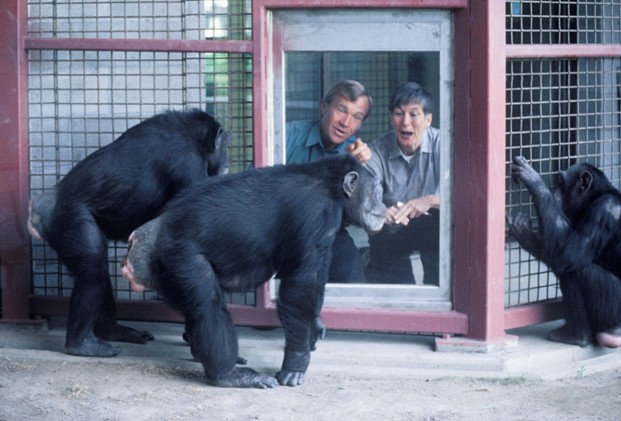
To understand why the nature of man is different from other species, we must first establish what our differences are from the primate world we physically evolved from. Our closest ‘relatives’ the apes, gorillas, and chimpanzees are like Man, family orientated, having respect for the hierarchical order of age and experience and are protective of their environment to ensure the safe upbringing of their young and provision of food. They do not desire to dominate other species or their like and will only kill or disable to protect their kind and the territory which enables their way of life. Their memory is instinctually formed from community needs. Their ego which is part of the mind that mediates between the conscious and unconscious is instinctually driven by their ancestral nature.
Human beings will go further to engage and unify with different kinds of people. They practice the hierarchy of blood ties but will not allow procreation to govern hierarchies of order considered necessary to defend the interests of like-minded need. They have an innate desire to dominate and control other species, and memory goes far beyond the need to remember place, person, and life-giving support. The ego that mediates between the conscious and unconscious is guided by two concepts which often war with each other, namely a need to understand rights and wrongs and the belief in their self-creation; I am what I am.
Whilst the environment engenders Man’s survival instinct so also does his self-awareness which ultimately governs his survival needs. It is evident from recorded history the ego of Man is intent on self-creation. Whilst conceptual values are broadly common across all ethnically different populations, conscious interpretation to effect the superego varies widely. Whilst Man’s instinctual nature to survive is primarily engendered by the environment, it is the ego which decides the cause of threat, the outcome of which will always be predicated by the awareness of Self as understood by the ego.
Because the ancestral nature of Man is elemental in origin it means that the id -source of all his instinctual expressions can never be fully rationalised. In practise Man’s rational mind is constantly attempting to balance the promotion of his superego with the instinctual irrational impulses that are generated by his ancestral heritage.
The result? He is continually in conflict with himself, which is why history keeps repeating itself, or as some would say he never learns….
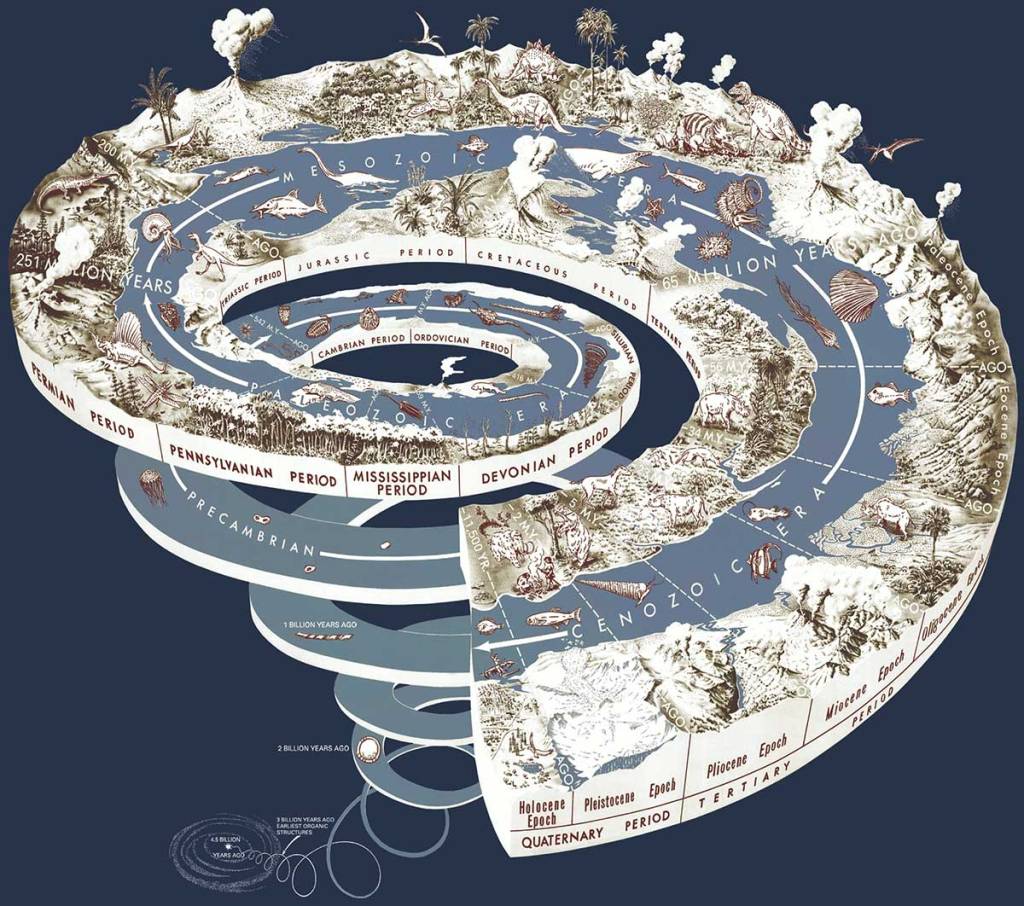
The Darwinian evolution theory states that species evolve over time through natural selection, where advantageous traits increase an organism’s chances of survival and reproduction. Molecular biology and genetics have confirmed physically formed evolutionary relationships, such as the close genetic similarity between humans and chimpanzees and acknowledges all living organisms share common ancestors, but the sciences are unable to explain how the uniqueness of man’s evolution was caused or why his egocentric development is so markedly different to our nearest physical ancestors. Survival of the fittest does not give an adequate answer. And so it follows his relationship with the environment is different to all other individualised life species.
In addition to individualised species, perennial plant life is by far the most widespread kind of life on Earth. Man does not describe it as having consciousness as he defines that only able of a species who is consciously aware of evolving self-creatively; the ‘I think so I am’ argument. Perennial plant life and its interactivity with the elements of fire, water, air, and earth have a major influence on Man. In accordance with seasonal life cycles, weather conditions, and cosmical influences, the perennial life world can undo and destroy Man’s physical creations.
And as Man’s sensorial nature is directly influenced by environmental changes they do affect the balance of the mental and emotional order of his mind. It is accepted many species have conscious awareness of impending change, both internally and externally before they become physically fact. Man however is overly dependent upon the rational mind to advise conscious awareness and will dismiss or repress the instinctual response which is trying to advise him.
His inability to consistently channel instinctual awareness is entirely due to the development of his rational mind which restricts the id of his consciousness the ability to express awareness of his ancestral memory, implicit to his DNA. This points to a fundamental difference between himself and other forms of Earth Life, all of whom maintain awareness of their ancestral mind as expressed by their instinctual nature.
Is it possible that some form of unearthly life affected the development of Man, and were causal of the difference between himself and other forms of Earthly life? We know the Earth has historically been impacted by meteors, fireballs, solar flares, and planetary gravitational pulls, altering land and sea masses, their vibrational nature absorbed into the Earth’s crust, but such physical and neo-physical phenomenon would also have influenced all other life forms, including our nearest ancestors.
To understand why humans are a uniquely different species and regard themselves as the Overlord of all other Earth forms of life we need to understand the nature of his consciousness.
Scientific research has been said to say some individual species don’t know they exist because they don’t possess reflective consciousness, i.e., the ability to know the self, and because they are driven by and totally possessed by the id. We should not accept this analysis because the instinctual self as manifested in a moving form exhibit both physiological and behavioural responses ultimately aimed at propagation which is compulsively selective. This means that vertebrates have awareness of what their need demands and that is a form of reflective consciousness.
And any form of reflective consciousness, whatever the species, is a form of mind that interacts between the id and the superego. So, for example because a fish can feel pain it does so because it possesses reflective consciousness. Some animals, including our nearest mammalian world relatives the chimpanzees have well-developed egos, a strongly developed interaction between their id and Superego which for them is a function of their societal memory and parental standards.
So how does Man’s reflective consciousness, the awareness of self, differ from his nearest mammalian relatives? In our own terms we describe our consciousness as the awareness of one’s mental states arising from the interactivity of the ego enabling the evaluation of thoughts, feelings, and experiences. And this differs in one critical aspect to the highest form of ego development in our nearest genetically comparable species, the chimpanzee, namely it is the ability to be selectively aware of our own mental states and decisively able to change their order and priority. Whereas the chimpanzee capacity to change order and priority is governed by the id’s memory reception. To put it another way their behavioural responses are predictable.
It is not because human brain is three times larger, but because it operates differently. Recent studies have shown that whilst we share anywhere from 96-99% of our DNA with the chimpanzee there are areas which instead of producing proteins, act by changing the formation and tactics of protein producing genes, which in simple English means humans have a DNA structure that enables thinking!
Am I saying that Chimpanzees don’t think? No I am not. What is different in Man is his ability to reason, whereas the chimpanzee only considers and decides on need. When human beings reason they invoke the order of their self-centred ego, which is forever unsatisfied with the responses!
Part 3 next week!