
In my previous series of writings, ‘The Beginnings of Man’, I concluded by saying there was a significant difference in Man’s capabilities post the Great Flood which approximated to a time period between 9’000 to 15’000 years BCE. Not only because extant theological and mythical records speak of educating Man, but because the historical figures, for example Quetzalcoatl the Aztec Feathered Serpent god, expressed knowledge that caused the survivors to regard them as Gods whose express purpose was to educate and save Man. What we know of the antediluvian world and the ‘Gods’ is from records written by post Great Flood survivors who variously describe the ‘Gods’ attempts to ‘engineer’ Man, pre and post the Great Flood.
Our recorded history tells us Man is a troubled creature, often rhyming events of the past into the present, seemingly not learning from those experiences, and dogmatically asserting beliefs that the instinctual-born commonsense cannot accept. The concept of Good and Evil always point to the ‘saved’ and the ‘lost, and these meanings are interpreted differently adventitiously by secular and theological powers.
In this series of writings I will show you how the mind and body as a union of energies are ‘constructed’ and tell you why our active model of consciousness is fundamentally flawed. Yes! I know that’s flying the face of everything that’s ever been said about the nature of consciousness. The questions that need to be answered is, what can be done to correct and regain the evolutionary order of consciousness we were conceived to have, exactly how does consciousness work, and finally what IS the definition of consciousness?
And does that mean as our ‘Gods’ intended before the ‘rebellious angels’ decided differently, as Enoch tells us, or does it mean the Darwinian process of evolution without the ‘Gods’ intervention?
As I have already advised in my previous series of writings, the physical root nature of Man is in common with other vertebrates. In particular, for want of comparison, with the ape and the chimpanzee. They and us have, as defined by Freud’s tripartite model of the mind, an Id, which is the instinctual nature, the Superego, and the in-between mind we call the Ego, which mediates between the impulsive desires of the Id and the moral constraints of the Superego.
Previously explained our nearest animal relatives operate this model of the mind differently to humans. Their consciousness is mastered by the id, and their superego is a collective form of consciousness that has behavioural ‘rules’ developed over thousands of years, largely in tune with the id. Their ego is very much a medium in their model of consciousness; and it does act as a referee, as Freud believed, when the id and superego have differences. In life practise their ego consciousness is primarily concerned with survival needs and like-minded relationships, which means the id is more an influence in the development of the ego than the superego.
Man may well have been similar in mind construction during his early Hominid form of development, if you like you can say his behavioural patterns were similar to the animals he hunted for food. For a period of time prior and post the Great Flood, some men evolving from the Homini branch of vertebrates to Homo Erectus and to Homo Sapiens who survived the cataclysmic changes on Earth were expressing consciousness different to their ancestral heritage. The cause of their survival, as with all other vertebrates, would certainly have been strongly influenced and strengthened by their instinctual nature, but it doesn’t account for the change in their ego’s form of consciousness, which is illustrated by the appearance of skills, hitherto unknown in primitive Man as we know of him prior the Great Flood. And that contrast can be seen in populations post the Great Flood where on the one hand Man was still ‘behaving’ as a hunter gatherer, and on the other hand at the same time there existed populations who were building effaces, developing sciences and functioning in complex organisations which required them to express a deeper understanding of language.
There can only be one explanation; the human BodyMind interacted with a God-like intelligence that expressed powers over Nature and had purpose to teach Man how to do likewise.
Time-wise we have no evidence of when this began to occur, but it was likely during the Pleistocene Epoch during which parts of the globe were not covered with massive ice sheets or suffering major climatic changes. And did man look any different after ‘marriage with the Gods’? Likely yes, as in all parts of the world we have physical and written evidence of ‘giants’ that not only survived the Great Flood but were still present in populations a 1’000 years ago.
In Freud’s model of the ego, otherwise described as the personality, the id’s (instinctual nature) influence is received as the needful pleasure driving force, whilst the superego’s embodiment of moral standards and societal rules is received as the strive to ideal behaviour. When the influences of the id and superego clash the ego reacts as a referee deciding how to modify these influences on a level of acceptance.
Freud is assuming he started with a ‘clean sheet’ that the impetus of divine accreditation provided the right order development of our collective consciousness, but it doesn’t account for ancestral ‘alien’ influences. His idea of the id as a pleasure driving force, can be accepted to have validity, but it does not account for the unemotional elemental force which the id manifests and unbeknown to us influences our reasoning nature because to ego is purposed to embody itself with ‘higher nature’.
And how is Man’s consciousness, as we know him post the Great Flood, different to his primate ancestors?
n today’s world where our knowledge of early Man is able to show modern Man’s genome records along with the ancient proteomics, which studies fossil proteins, as evidence of the interbreeding relationship of different types of Man, it is not, as I’ve repeatedly said, fulsome evidence of how our consciousness has developed.
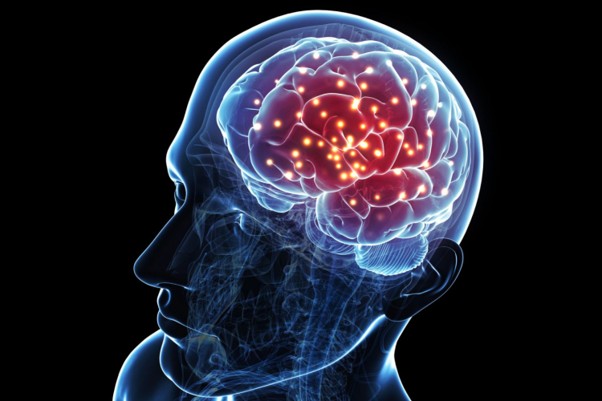
The compelling ‘evidence’ provided by science is the development of Man’s brain, which ‘experts’ are inclined to say is the central hub of consciousness, which has increased in size over millennia, more so than any other living primate. Sociological evidence clearly points to its ongoing complexity post the Great Flood, as a step-change compared to our hunter gatherer human ancestors and their adaptability during the Neolithic Revolution 10 -12’000 years ago, creating settlements and domesticating animals.
Sociological evidence additionally shows a step-change post the Great Flood 9-10’000 years ago, where we see expansions of intellect in the study and application of sciences hitherto unknown, a development that was accompanied by a strong destructive tendency in pursuit of power; dominating other species and warring against fellow humans to subjugate their consciousness to accept ideological concepts.
And we have evidence from pre-diluvian times, as well as post the Great Flood, of ‘Man’ having detailed knowledge of the Cosmos and with powers able to harness nature to his purpose. Evidence that cannot be correlated with the sociological knowledge we have of Man during the Neolithic revolution.
Recorded history shows us that ideological concepts of a religious nature contend for superiority, and concepts of materialistic power vi for supremacy. All of which is evidence of a troubled form of consciousness that has its beginning prior to the Great Flood.
Recent studies of the neurological nature of the human brain have evidence to show the brain, as opposed to the held view as the progenitor of conscious awareness and action, is stimulated to act by forces outside of the brain. Research is showing a force is acting in billionths of a second before the brain functions This is causing a furore in scientific circles because it upends the view that the brain is the centre of consciousness.

