
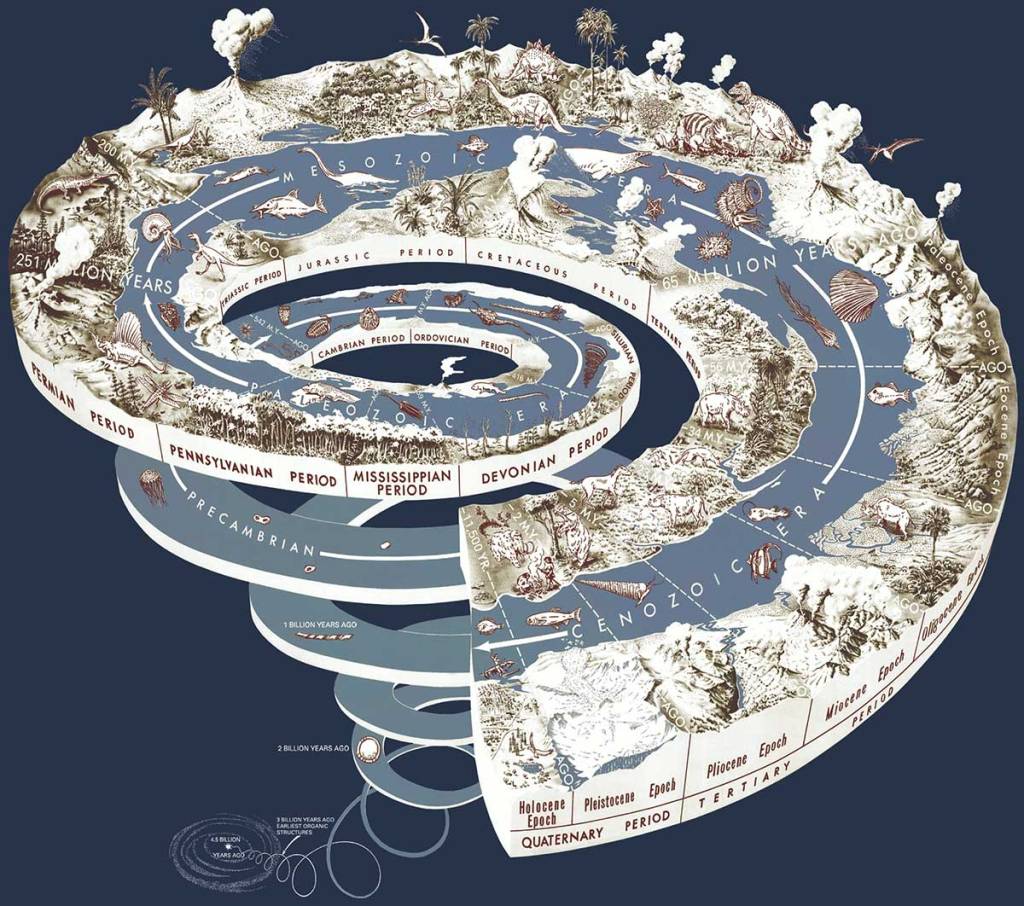
The nature of Man has evolved over millions of years, changed by environmental conditions, by the response of his instinctual nature and by the actions of his ego. The DNA of all earthly forms of life, Amniotes, Synapsids, Mammals and Primates are present in Man, which is clear proof that the birth of Man was earthly by nature.
Man describes himself as more evolved than any other form of earthly life, and that is an assumption based on having 20 times more DNA than a chimpanzee, able to express his consciousness self-aware, and knows his rational nature is not shared in any superior way with our nearest primate ancestors. It is an assumption because after you allow the knowledge we have acquired in researching our DNA and the genomes of other species, there is still more unknown than known of the purpose and action of DNA in Man. Our self-interested view of other species assumes Amniotes, Synapsids and some mammals don’t know themselves because they have (as we say) no self-awareness.
Physics only began to accept in the 20th century the root nature of energy is not physically based. The huge spatial state in the atom between physically identifiable neutrons, protons, and electrons, previously described as ‘space’ manifests Black Matter influenced by an unknowable force now called Dark Energy, both of which influence the functional nature of Light Matter. Whilst Astrophysics and Particle Physics can provide evidence of Black Matter and point to the existence of Dark Energy their true nature continues to elude definitive understanding.
Understood or not it throws into question the evolutionary nature of all forms of life, not least being Man. Man is undoubtedly different and able to control the development and action of other species in the Light Matter world of Earth but is he truly aware of his own design and purpose? The physical nature of Man has evolved from the branch of primates known as Haplorhini that subsequently split, separating the New-World monkeys and apes from the Old-World monkeys and apes 30 – 40 million years ago. The distinctive features of the Catarrhini apes and monkeys with downward pointing nostrils found in Africa and Asia clearly indicate they were the ancestors of Hominoidea linage of apes that were evolving 25 to 30 million years ago who are more directly our ancestral lineage.
Early man’s existence is evidenced by discoveries in the Middle East that date from 17 million years ago, and onward into the Neanderthal and Denisovan periods between 430’000 and 25’000 years ago. Cataclysmic changes that altered land masses and seas and long periods of extreme temperatures causing the demise of dinosaurs and many other primates would have destroyed some forms of early Man. The environment was a major influence determining that only the fittest survived, but was that due their intelligence as well as physical hardiness? Whilst we can be reasonably sure with DNA evidence how a hybrid form of Man become the Modern Man, science cannot read from physical remains how their minds behaved.
Evidence from early forms of human recorded communications (albeit these are described as Myths and Folklore) posit the existence of human civilisations in Lemuria, Atlantis, Hyperborea (north polar region), and Adamos (south polar region) in the pre and post Deluvian period which approximates to the ending of the Younger Dryas age 13’000 to12’000 BCE.
This ‘evidence’ which has mainly survived in myths, folklore, symbolic writings, and physical building remains, in the post-diluvian epoch clearly advises a difference of evolution between their inherited societies and the hunter gatherer communities of men who lived in the same and subsequent periods of history. This dichotomy cannot be resolved by tracing alternate routes of human evolution from the known history of Earth life development.
Scientifically we cannot confirm the existence of these ancient civilisations, but neither can we cannot entirely debunk the mass of archaeological evidence of intelligent human societies that predate recorded history and show the existence of intelligent beings on Earth prior to the cataclysmic floods that occurred following the end of the last major glacial period known as the Last Glacial Maximum 20’000 years ago. As Earth’s climate gradually warmed, the glaciers in the north of North America, Europe and Asia began to melt. Vast quantities of water flowed back into the oceans. Over thousands of years, sea levels rose steadily. Between 15’000 and 8’000 years ago sea levels rose rapidly enough to flood huge areas of land across the globe.
Stories of the flood appear in many cultures, such as the ancient Mesopotamian epic known as the Epic of Gilgamesh, the biblical account of Noah’s family and of animals saved from the flood, the story of Deucalion and his wife Pyrrha, who survive a world-destroying flood sent by the gods. In Hindu tradition, a similar story describes Manu being warned by a divine fish that a great flood will soon destroy humanity. Flood narratives are also in the folklore of the indigenous cultures of South and North America, Australia, Africa and Asia.
In all these stories and myths evolved Beings were (a) aware of the floods before they happened, and (b) they taught the Homo Sapiens survivors how to reclaim good soil, domesticate plants and trees, learn building techniques, mathematics, astronomy, and the ability to record their actions in symbolic forms of writing. It is following the great floods that Man as we know him today began to evolve. The intelligent Beings of these myths are recorded as human-shaped Beings with God-like powers, and it was their foresight that saved Modern Man from destruction by appointing emissaries such as Noah in the Bible and Utnapishtim in the Mesopotamian myth how to survive the flood.
The earliest form of recorded history speaks of Gods interacting with humans, and in some accounts birthing gigantic forms of Man with powers able to harness and control the elemental order of the cosmological Earth. The only anthropologic evidence of giants is of primates who lived in subtropical Asia from about 2 million years ago until roughly 330,000 years ago. Upwards of 10 feet tall the (Gigantopithecus blacki) such palaeontological evidence we have indicates they were of the genus of Ape. However, what we do know is Homo Erectus lived in the same period and they may have physically mated. But we have no evidence to suggest their evolution or a hybrid form continued to the Younger Dryas period, the era when the ancient civilisations referred to are said to have occupied large land masses prior to the great flood, however giant men are recorded to have lived both prior and post the great flood.
Man can be said to have become Man when his conception became individualised by the form of ego he has, making him different in consciousness to all other species of Earth life. The consciousness of the individual forms of mammals, Invertebrates, Amphibians, Reptiles, Fish, and Birds are all instinctually developed, the expression of their conscious nature and the awareness of their light form self is governed by the inner characteristics of their species. What one could call their group nature.
Man’s inner characteristics are altogether different from the ancestral root which governs other species. Why then is he so different?
Part two continues to seek answers to this question…
 Mine Quick Voice of Aquarius