A Remarkable Man

I was as you proverbially say at a loose end, walking the high street, gazing absent mindedly into shop windows and people passing. Thinking, or rather over thinking my place in the world, questioning my purpose. The smell of coffee paused my stride and banished my thoughts. I entered the café. It was busy all tables occupied. Turning to go out I noticed one table only occupied by a big, bearded man who sat motionless with his eyes closed. The plate before him was empty.

“Do you mind if I sit here?” I asked, smiling to myself.

“Be my guest”, came the immediate reply.

Somewhat disconcerted, as he didn’t open his eyes to look at me, I sat down to await service expecting him to leave. He didn’t move or speak again. Eyes stayed closed. For all intents and purpose, I wasn’t there.  He wore a fur lined jacket over a mottled coloured tea shirt and jeans. Hair and beard were well trimmed, suggesting a recent visit to a barber. Appearing not to breathe he sat motionless. As I began to be concerned some kind of health issue was in progress, the waitress tapped me on the shoulder.

“What would you like?”

“Latte please, and…. Would you like a drink?” I said loudly. The man opened his eyes and inclined his head and smiled. “Very kind of you -yes please I’ll have a Mocha”.

Surprisingly for a big man his voice was higher toned than expected. Feeling a bit sheepish, I placed the order. She smiled laughingly at me. “You’re the third one this afternoon.”

I wrinkled my brow, “What?”

She shrugged her shoulders and smiling walked away.

In askance I looked at him. “She’s referring to the man and woman who have shared their company with me.” He said.

“Oh… so you’ve been here a while then?”

“A couple of hours maybe… not in any hurry. And thank you again for the coffee, much appreciated.”

I looked at him with interest. Unlike many I know he clearly enunciated his words, and the deliberate way he spoke conveyed the impression of an intelligent educated person. I’d say he was in his sixties. His dark hair and beard were lined with grey, yet his face was strong, and he looked fit.

“Do you come here often?”

He chuckled. “First time for a long time. And yourself?”

“No. The other side of town is my usual stamping ground.

“So, what made you change your habits?”.

“Oh, I don’t know, change is as good as a rest.”

“At a loose end, are you?”

“Not exactly”, I lied

“Do you work?”

“I teach. Don’t have any classes this afternoon.”

“And what may I ask do you teach?”

“Digital and Social media courses.”

“Very much a modern man then… do you find that rewarding?”

I looked at him curiously, his question touched a soft spot. “Yes and no. I come from a computing background, so this is something like a second career. The digital world of today is outpacing me. I often find my pupils have an intuitive grasp of applications and with aspirations to engage with AI, which is not something I feel particularly comfortable about.”

“A subject of much debate from what I read, which I find amusing.”

“Amusing, how so?”

“It’s championed as new age invention, but in essence it’s as old as the hills”

“How do you make that out? Digital technology and AI is a modern invention.”

“In machine terms -yes, but what in essence does digital technology enable? It simulates human intelligence for the purposes of doing tasks and giving directions. Do you agree?”

“Simplistically speaking, yes, I can’t argue with that”.

“A task which say takes me one hour to complete, involving decision from a host of variables can be digitally programmed to achieve the same result in a matter of seconds. Even more AI can predict outcomes from inputs that would take you or me many exhausting hours to assess and produce the most advantageous results in real time. Would you say?

“Yes I would, and that gives rise to ethical outcomes as well, which is one reason why I think such development is problematical.”

“I guess concern or care depends on which side your bread is buttered on”, he said with a laugh. “For example, as no doubt you know, many investors who earn in the stock markets do so on trading platforms which use AI to determine the intrinsic value of stocks and currency and advise accordingly. If I were to use such earned money charitably, would you agree the use of AI is for the betterment of others?”

“I guess so.”

“And if only to line my own pockets?”

His line of questioning was making me think. Was he trying to catch me out?

At length I replied. “Obviously some people make money to personally advance themselves, but if the money earned was from ethically sourced shares, surely that is a more acceptable way of earning?”

He sighed and shook his head. “Money is an outcome which gets dressed up to suit the purpose of its use. When I said digital technology and AI is not new, I was referring to its function. The ways in which man’s mind works to increase fortune, care for and better themselves in today’s world is essentially no different to the man of the past. Now we program machines to think for us. Some do it to benefit others, and some do it to benefit themselves. Whether the purpose is laudable or not, someone loses what another gains.”

“True. But I don’t see how you contend that AI is not new. Surely you are not saying our ancestors exhibited a similar form of intelligence to AI?”

“Oh, but I am!”

At this point our coffee’s arrived and for a moment or two the conversation gave way to tasting our drinks. I took this opportunity to introduce myself and ask his name. 

“When you must just call me Joe. Allow me to explain John. Digital technology and AI is all about making something happen quickly and by the same token being able to do many things at the same time. Ancient man’s psyche is no different from ours, he also wanted to do things quickly and get the best results. And strange as it may seem his method to get intelligence to direct and advise solutions advantageous to himself is a practise still prevalent today.

Having no idea what he could be referring to, I just stared.

He continued. “Do you know what a Jinn is?”

“Some kind of devil?”

“You can be forgiven for thinking that. There are views in the Islamic world which agree, however in pre-Islamic times the Arabians believed they were intelligent, morally responsible beings in the afterlife they were able to commune with. Throughout history in all parts of our world there have been beliefs and communication practises with the afterlife. In our present world where migrations of peoples have occurred on a large scale, you only need to look at this country to see the practise of many beliefs, and in respect of what I’m talking about those who accept an afterlife as a reality. 

I can see by your expression you are wondering why on earth I am talking about spirits and people who commune with them. Let me continue before you make judgement. Man has often found himself in situations where he is at loss to understand what the outcome should be. That could be the need for a practical solution, or a requirement to solve a mental problem, and yet again it might be, more high-mindedly, the need to be guided on a moral or ethical issue.

The oracles in the Hellenic world were not only providers of spiritual guidance. People wanted to know outcomes which would support their ambitions, or cures for illness. The Shaman of Eurasia and those of South America, Medicine Men in the North and in Canada were not simply spiritual guides to their communities, they provided practical help on request. People of power often consulted such people. Saladin who is mostly remembered for his conquests to unite Muslim territories in the Middle East and the capture of Jerusalem in the 12th century was first and foremost a religious man who took advice and guidance from Sufi exponents. And of course, not all guidance and predictions were heeded. A case in question is Saul, the first king of Israel. Despite his own edict to banish sorcerers from his kingdom, he consulted a woman of Endor on the eve of an important battle against the Philistines (disguised of course) and asked her to make contact with Samuel who informed him if he went into battle not only himself, but his three sons would die.

Whether Saul thought he was invincible, or didn’t believe what the woman had told him, we will never know. The outcome of course was as the woman predicted.”

I listened with interest. He spoke quietly with authority, but nonetheless I was not entirely convinced of the view he was projecting.”

“If I understand you right, you are saying some people, who I would call psychics, have the ability to forecast the future?”

“That depends on what you mean by future. I think the poet T.S. Eliot should be remembered for best saying this about that. “Time present and time past are both perhaps present in time future, and time future contained in time past.”

“So, are you saying psychics, or by whatever name they go by, don’t predict!”

“I waited while Joe savoured another draft of Mocha. Carefully replacing the cup back in its saucer, he looked me straight in they eye, and said. “Of course they do, though bear in mind some do by reading body language and the mental character of their clients. And Astrologers interpret the signs in the heavens. A few and only a few will hear from their jinn, their familiars, their afterlife inspirers.”

“I’m confused. If I’ve got this right you are, as you quote from Eliot, not believing in a future, yet you say psychics can predict it. I thought you were arguing the practise of consulting psychics is essentially no different to the functions of AI and digital technology in general.

“That’s right. Eliot goes on to say, ‘if all time is eternally present, all time is unredeemable. What might have been is an abstraction, remaining a perpetual possibility only in a world of speculation.’ If you look very carefully at what digital technology and its AI offspring is doing all outcomes are based on present knowledge. When it predicts a solution, which for arguments sake, is forward in time, it is conducting specific actions based entirely upon present knowledge. When you use that intelligence to action a need in time hence, you are doing so in present time.

A psychic able to channel higher frequency communications advising events does so in present time and the source of such communications are also present. Futures, as we conceive them, and as AI determines, are present minded speculations. When a program is written to perform certain functions accurately 100% of the time, as for example for computer hardware and their applications it can be said to function predictably, and that as I’m sure you can agree is a present process.”

Joe looked at his watch. “I have to be off John. It’s been a pleasure talking with you. I’ve no doubt we could have gone on talking for much longer. I can only  hope something of what I’ve said has meaning to you. When you next order something on the internet, like me and everyone else, you’ll make decisions from the first page of suppliers shown you. And we are aided in making our decisions by the algorithmic functions which propose best buys -and it even accounts for where you live!

And before I could respond he stood up, shook my hand, and swiftly left the café.

What a remarkable man!

Venus Rising

The planets conjunct, portending his birth bade us search on…….

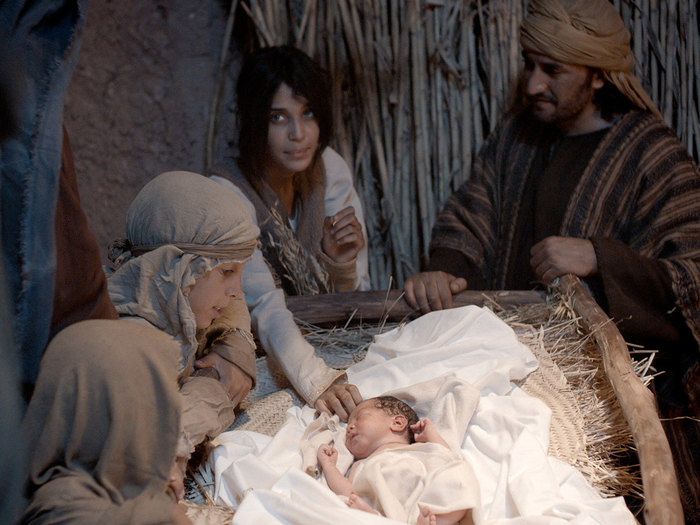
We found him there in Bethlehem
as the charts foretold but not with ease.
Not one well to do house of Arab or Jew
Roman or Greek had birth between them,
no infants male or female could be found
born that auspicious day; or women
nigh to deliver under the star bright sky.

The planets conjunct, portending his birth
bade us search on; visit caravan, tent,
Inn and stable. Divers places all to no avail
until on tavern steps, feet begging to rest
we overheard a shepherd speak,
of how his shelter was occupied by two
well dressed Jews. Man, woman and a child just born.

Yes! –and here he hurried to tell his kin
such peace as lulled his sheep to sleep
and such Light about despite the moonless night
that quite amazed him. A wine skin for his guest
he took, and his sister with a knowing look
on being told, insisted she also would journey back.
He talked of voices of unseen guests.

At once we realised the town full – where else?
Our profession advised; the tavern temptation dismissed,
we had the shepherd guide, our bodies begging for rest.
The pathway hard, our camels bad tempered,
the cold wind swept hills unforgiving.
We talked of turning back, yet could not agree,
urged on by power greater than the body’s sap.

Wearily we arrived, not a moment to soon
and knew at first sight, our year long journey
cross sea, mountain, desert, river and plain
was justified. Our faith upheld, the purpose
before us in the bedding straw, a child
born Venus; the power on Earth to Love.
His eyes; the majesty of the Monarch of Time,

Our strength returned quite unexpectedly, as if
we ourselves had the child’s unlimited power.
In his grasp we placed our gifts, Myrrh, Gold
and Frankincense. We gave news of Herod,
Spoke highly of the child. Held our tongues
in check on futures and bar that journey soon to be
would say this and only this –

“His word and deed would long be sung in praise
ere Jupiter and Saturn swung the sky
and Man in darkness has the voice to cry
Hosanna, Herald of the peace to come!”

A Shepherd’s Tale

I do hope my post this week finds you well If you are locked down like I am, markets falling, pandemic raging, loved ones distanced from you -I urge you to read this extra long mail before the new year looms on the horizon. Whether you are religious or not the message of love is universal.

You may or may not know there are two Bethlehem’s in Israel; one in the South near Jerusalem and the other in the North near Nazareth. Gospel accounts of the Jesus’s birthplace are only found in Matthew and Luke –not mentioned in Mark or John, or in the Gospel of Hebrews, otherwise known as the Aramaic Matthew. It is Bethlehem in Judea that is referred to in Matthew and Luke. The other Bethlehem is in Galilee, known as Bethlehem of Zebulun, approximately six miles outside of Nazareth, whereas the Judean Bethlehem is some 68 miles away. One has to question why Joseph, who lived in Nazareth, would have taken a pregnant woman on such a long journey to comply with a census demand in the South when the Roman administrative centre for the North was Sepphoris -less than five miles away?

For that matter why would he need to take Mary, since the registration of wife, siblings, and other dependants was made by men, or otherwise by women in powerful positions who owned land. The purpose of the Roman census was to establish who could be taxed. We are told by the gospels that Joseph was betrothed to Mary and they both lived in, or in the proximity of Nazareth. If that were true at the time of the birth, or nine months before -they would have been breaking Jewish law and living in sin. Joseph, we are told was a carpenter, yet his work would have included building or repairing dwellings, making agricultural tools, and have required skills to work metal, make drains and culverts. And we must not assume he worked on his own but had or was part of a business employing others. And according to Apocrypha writings Joseph had sons older than Jesus.

How come Jesus’s birth took place in or near Bethlehem?

It is well documented a riot took place in Sepphoris around 4 – 5 BC. The Jewish population rebelled against Roman & Herodian authority which resulted in the city being burned and 2000 Jews crucified. Tenable reasons for Joseph and Mary not being in Nazareth when Jesus’s birth took place are (1) they were on their way to Mary’s family who lived in Sepphoris and Jesus was born prematurely (Anne the mother of Mary and Joachim her father, according to New Testament Apocrypha Gospel of James, lived there), or (2) they were fleeing from Sepphoris to escape the conflagration and birth took place before they could reach home. There is no evidence of a census during that period of time.

Mount Carmel is but a few miles from Bethlehem and dotted with caves, as also are the Galilean Hills at the top of which is Bethlehem, and in those days Bethlehem was a large town, not a village. The Essenes had a community on Mount Carmel and some of their calling lived in villages and towns of Galilee –this branch of the Essenes, by far the largest, were known as Nazorean’s. there is reason to suppose Joseph was a Nazorean -his son James the Just became leader of the Essene community in Jerusalem in later years.

The Way of the Sea was a coastal plain that extended the length of Israel, from Judea, Samaria to Galilee and beyond. Shepherds at that time were regarded socially as the lowest of the low and were of two kinds; those who lived and tended flocks close to villages and towns and the more nomadic groups who moved up and down the Way of the Sea. The nomadic shepherds were mostly of mixed blood, hailing from the desert regions East of Israel, and those with roots in Galilee and Samaria. The Samaritans were at odds with the Judeans and had been so for some 400 years as they believed their Pentateuch bible was the authentic word of Moses and Abraham. They were also more liberal than the Judeans and allowed intermarriage with non-Jews.

I’ve provided this background so you may better understand the scenes described in my poem, ‘A Shepherd’s Tale’.

Consider, discuss, decide as you must. A boy
of nine I was, given to play? Yes-
but impatient to grow. A minder of sheep
and goat, not quite a shepherd, you understand.
Arab Jewish Samaritans, lowborn we were
under Roman rule in the land of Moses.

Tent dwellers; nomadic in the Way of the Sea
we moved our flocks from pasture to fold
over plain, hill slope, through mountain pass.
Self-sufficient, our mixed blood had no ties
in towns and we were shunned in cities.
At that time there was much disquiet,

camel borne travellers would hail us
seeking safe passage to Damascus
anxious for news, telling of homes destroyed
of livestock lost. Herod by the sea of salt
in hope of cure, still covetous of power.
Riots and Roman soldiers everywhere.

It was the hottest time of year -too hot.
My father the elder shepherd of our band
decreed we leave the plain of Armageddon
skirt the Galilean hills and drive
to Mount Carmel and fold there in cool caves
the pasture good, the Kishon river close.

Unusual for time of year it rained unexpectedly.
Wet and freshened I explored cave and gully
gaping at rock paintings, sling shooting
hawk foolish enough to target our flock.
When night fell there was talk about events
on the highway, riots in Sepphoris.

Mahmud was our Rabbi, a Samaritan
Who taught us boys by rote from a scroll.
He would disappear for days on end,
reappear warning of wolves, thieves in hiding,
bringing herbs, fruits, figs, salt preserved fish,
feet, hands, and body bruised and bleeding.

But not this time -from the tomb of Rachel
he had seen columns of soldiers, pillars of smoke,
people fleeing carnage, a forest of crosses.
He arrived much distressed. Nearby, he said,
there is a camel camp of Persian men,
star diviners, here for some special event.

So deep the dreamless sleep I slept, when roused
I complained of being woken. My father’s
command to dress was brusque and impatient.
Mother soothingly said be quick no time to rest.
Sheep and goat were want to break the folds
and strange lights had appeared in the heavens.

Girding mantle, grasping staff, sling, and pipe
I joined the men grouped around a fireside
where Mahmud, repeated yet again
to disbelieving ears, of a vision given
in prayer, how an angel of the lord appeared
announcing birth of a messiah to all men.

How he had run to the Kishon River
to impart this news to the Persian men,
and they, exclaiming in response said this
was the proof, the final proof they sought.
And without delay broke camp and headed east.
The river shining phosphorus in the night.

Did I hear a voice as we knelt in prayer?
For when Mahmud said follow me, I knew
the angel would want us shepherds go!
Find the birthplace, give tribute to the child.
More in fear I think, of unearthly things,
Claiming protection of the women folk,

some herders stayed with the folded flock.
For me this was adventure, side by side
my father leading with Mahmud we trod
the Magi’s tracks. An uphill beaten track
Nazorean’s often trod beyond Bethlehem
to Elijah’s tomb. In silent awe we came

to where the light was strongest; there halted
by a well-dressed Jew, then let pass. Mahmud
having yet again spoken of his vision.
We entered a cave, two donkeys tethered
looked at us curiously –and there
in a lamp lit area no bigger than a tent

a babe in swaddling clothes lay in the arms
of a woman and before them, three Magi.
Also, an Arab woman, an older sage-like
Jew and a fearsome looking man whose smile
belied his looks. The air perfumed –a scent
so strong my head whirled with feelings.

We knelt on the hard stone in a presence
of many persons unseen; God’s angels
I know them now to be. We presented
lamb and kid –the best of the litters
we had, and in turn were given sweet wine.
Yet I was not allowed, and she, seeing this

beckoned me to drink from a leather gourd
that hung from the cradle bed, a sweet
warming juice. I drank gazing as I did upon
the new-born baby’s face. Then not asked
but sure of rightness I began to play my
shepherd’s pipe. With eyes closed he smiled,

as if somehow, he had heard me play before.
The tune was new to me and full of majesty,
my fingers moving my brain asleep
I lost all sense of time, only just aware
of his mother’s happy face; the attention
of all that were in that holy place.

As dawn began to show we took our leave.
My father with pride made much of my tune.
There was curious talk about the older man,
was he her husband? Why birth in a cave?
They were not poor, and the Magi had
given gold! There had been talk of Herod,

more so the riots and of Rome’s steel hand.
Yet for all this talk as we returned, the paths
aglow, I sensed my nomadic life would never
be the same again. We had gained in status
been received as equals –us lowborn
shepherds; and feted at a godlike event!
Yet despite this, seeds of doubt took root.

The holy book lost its magic -I questioned
why Jews and Gentiles warred, sacrificial lambs,
the militancy of God. Instead, I dreamed of union
in remembrance of the child, believing
he would one day share our daily bread
forever hopeful that our souls might wed.

Consider, discuss, decide as you must
the burden of proof is a human need.
My shepherd’s tale, straightforwardly said
is to you a plea -that in the body’s Keep
your soul should no longer groan and weep
but celebrate the Love that is Heavens Bread.